Platform on architecture, interior design and landscape architecture
It's about tactility, detailing and consistency
In commercial construction, the biggest design decisions, such as construction, envelope and installations, are often fixed early. The choice of interior materials follows later in the process, while that layer has a major influence on use and appearance. Caroline Brand, Account Manager Architects at DecoLegno, sees room for a sharper consideration there. “Interiors are still regularly ‘just included’. While that is precisely where the experience of a building becomes concrete.”

That consideration, she says, is not just about aesthetics, but about detailing, maintenance, feasibility and consistency within the design. Material choice determines how a space is used and how surfaces behave under intensive use.
Brand has an architectural background and previously worked as an interior designer. She knows both perspectives. “Building architects often tackle interior design themselves. That's fine, but it requires a different focus. It's not just about a wood finish and a color accent, but tactility, detailing and consistency.”
In offices, hospitality and healthcare environments, that materialization is put to the test every day. Counters, wall finishes and custom furniture have to deal with intensive use, cleaning regimes and changing users. The design must be able to withstand that.
The choice between natural and decorative materials is usually determined by project requirements, less by preference. Solid wood works and discolors. Natural stone adds weight and requires constructive attention. Textiles are not always appropriate in environments where hygiene and maintenance are a concern. Moreover, in projects with multiple floors, phases or locations, natural variation can lead to differences in appearance. Decorative board material makes the final appearance predictable. Color, pattern and texture remain constant, even with subsequent reorders.
In addition to appearance, performance in use plays a role. In utility projects there are requirements around fire safety, wear resistance and moisture load, depending on function and intensity of use.
Decorative board materials are available as decorative chipboard and HPL and are used in custom furniture, wall finishes and fixed interior elements. The materials have fixed specifications in terms of wear resistance, moisture resistance and fire behavior, depending on the chosen carrier and finish. This makes them suitable for use in offices, care environments and educational buildings, among others, where maintenance and safety requirements are important. For the interior builder, it means a stable material that can be processed predictably, without post-treatment such as sanding, oiling or painting on the building site.
That predictability does not mean that the design palette is limited. The development of textures has broadened the range. Wood decors are sophisticated and highly realistic, but textile and stone decors are also used in situations where the natural material is less technically suitable.
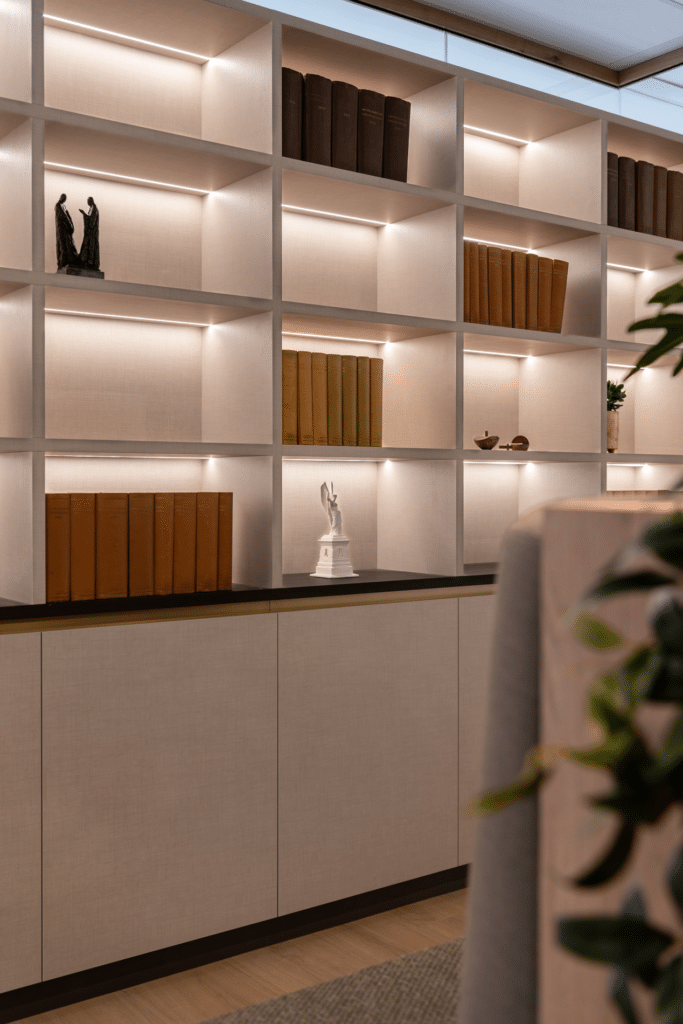
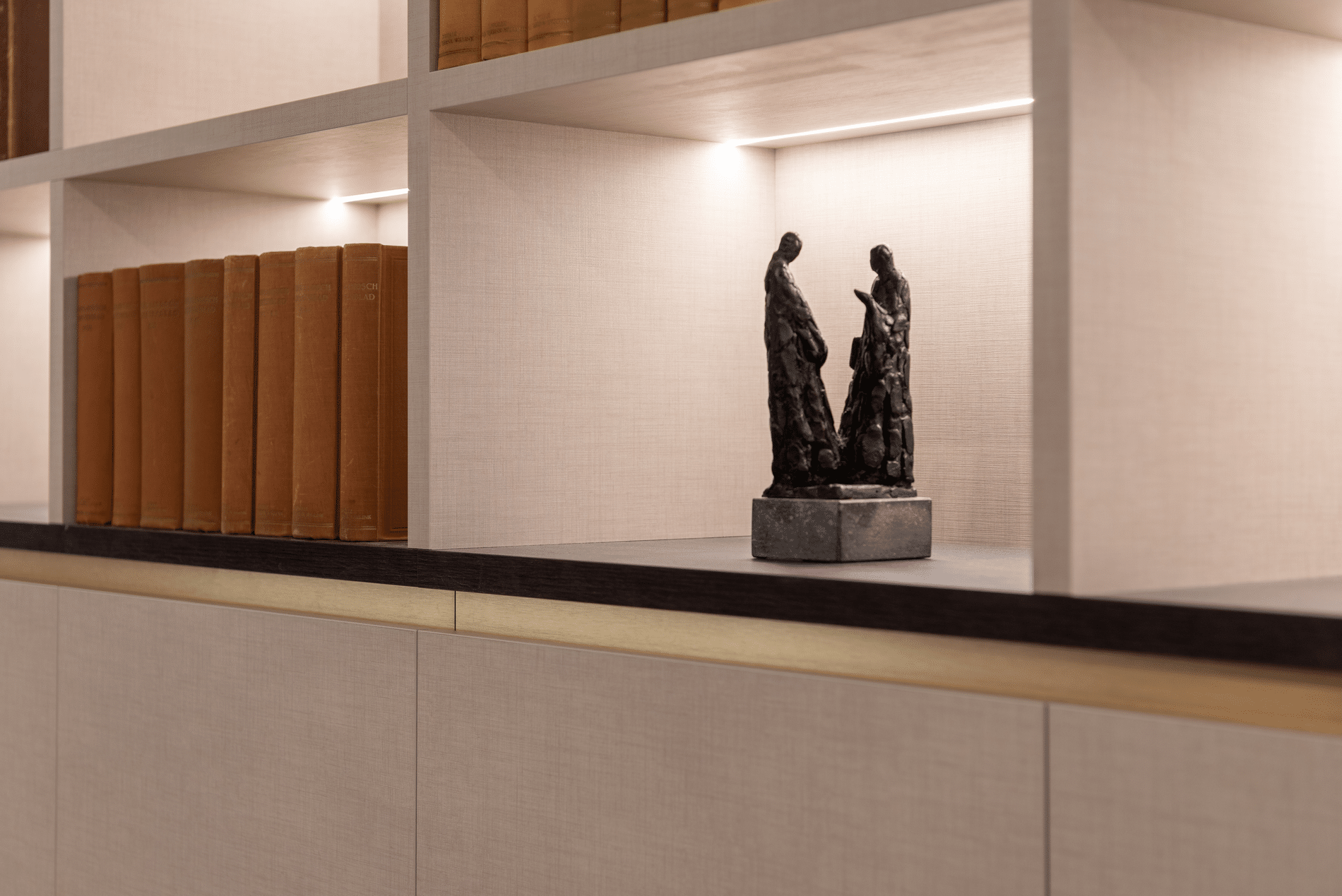
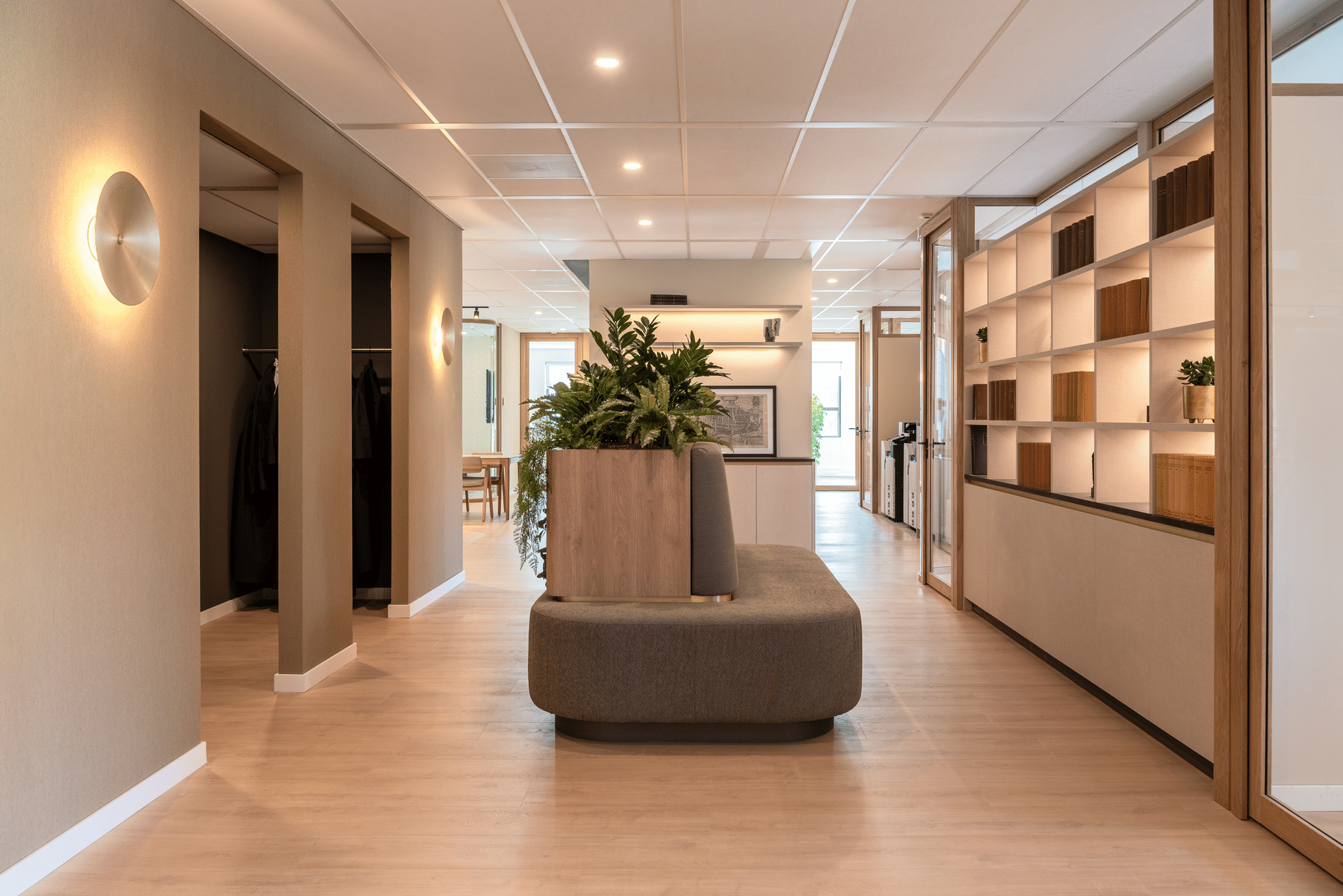
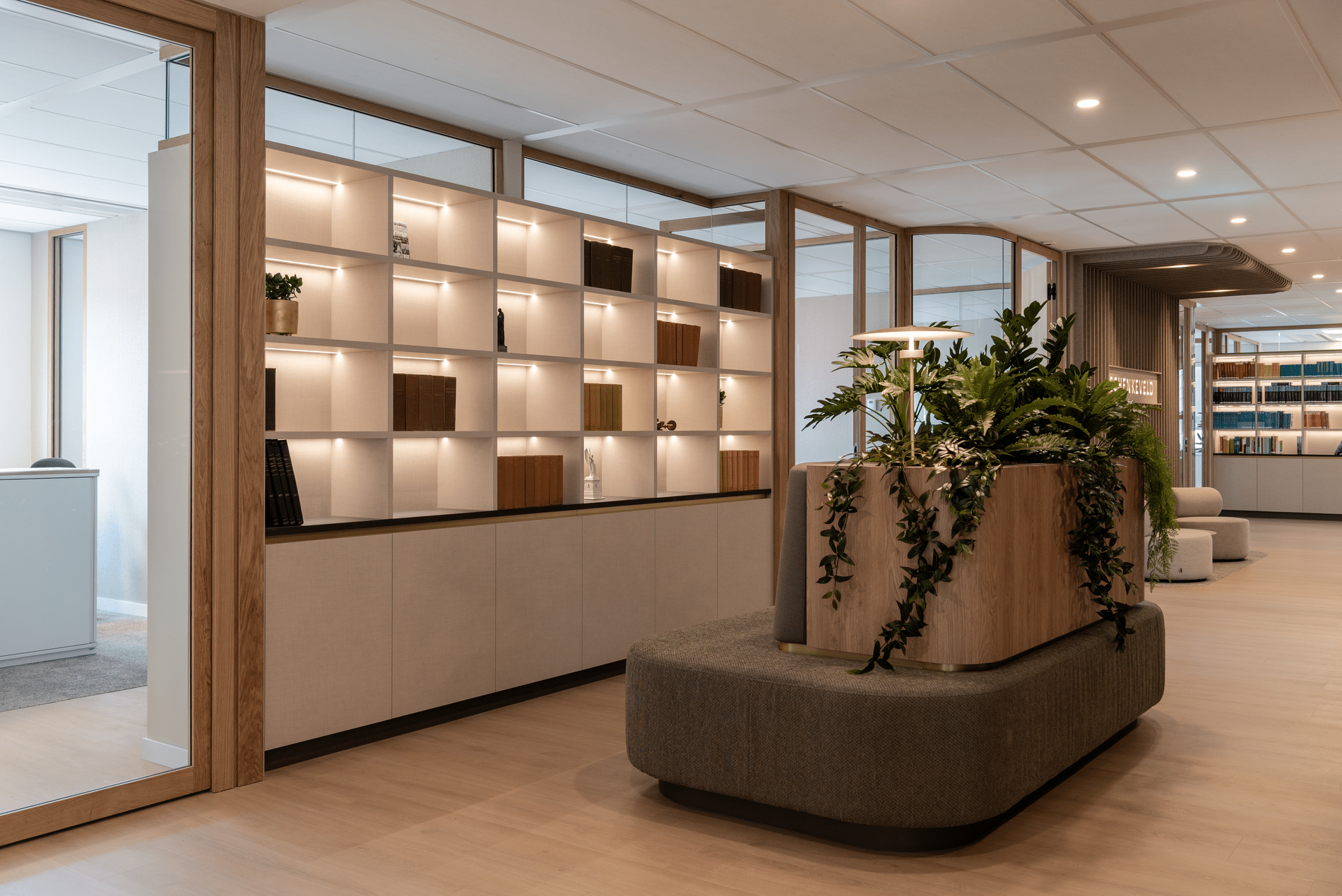
In a recently completed law firm, that approach is evident in custom oak-textured cabinetry combined with a linen-look finish. The materials give the interior a warm look, while withstanding daily use and cleaning. The example demonstrates that the choice of decorative board material stems not only from technical constraints, but also from the desire to combine atmosphere and performance.
Brand notices that, in practice, specifications are still often repeated from previous projects. “In doing so, you sometimes miss the opportunity to re-examine material choices, because not every project requires the same solution.”
“In projects where weight, maintenance, fire safety or feasibility weigh heavily, decorative board material can be a logical outcome,” she says. “Then it's less about material preference and more about what works within the constraints of the design.”