Platform on architecture, interior design and landscape architecture
New skin, existing skeleton
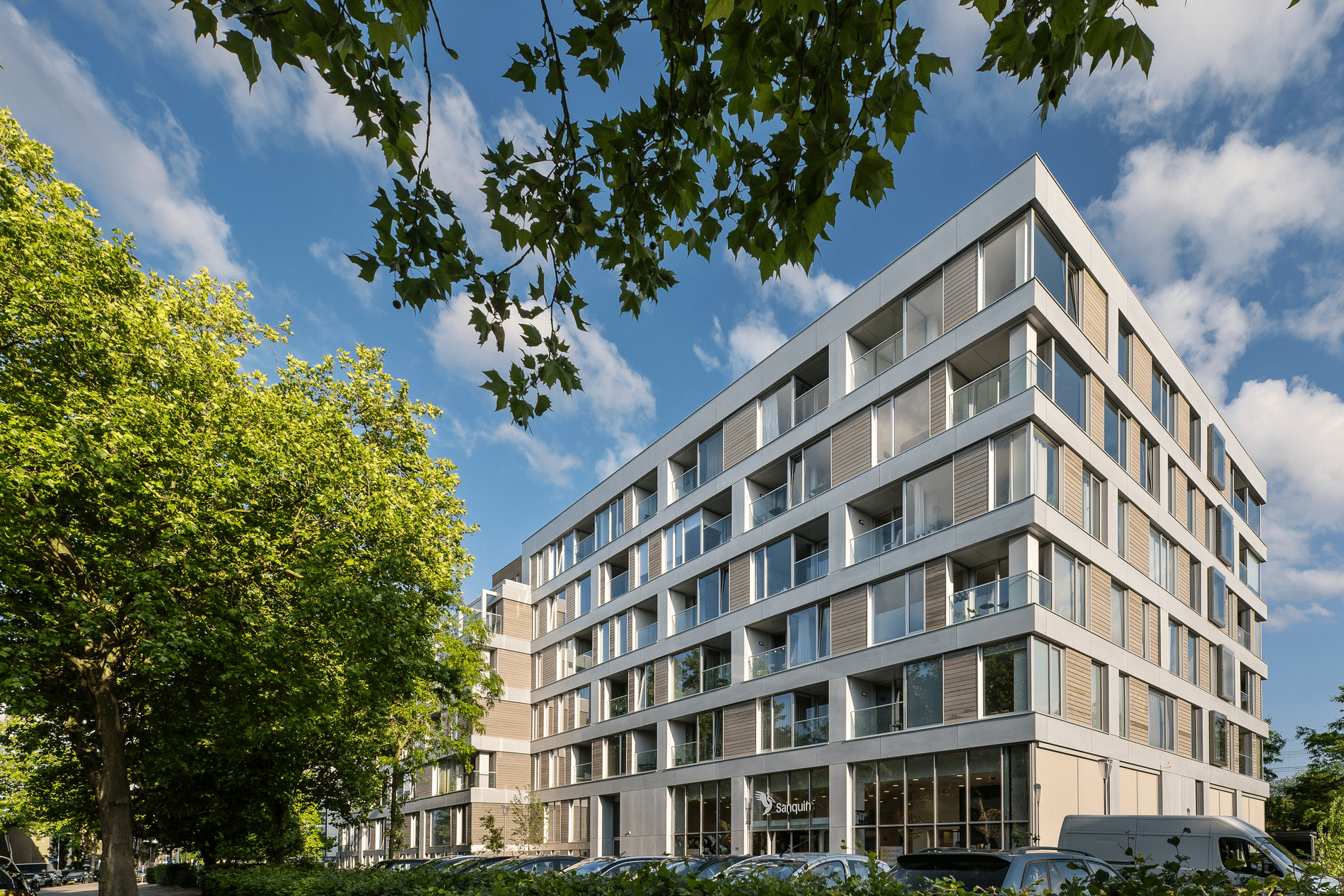
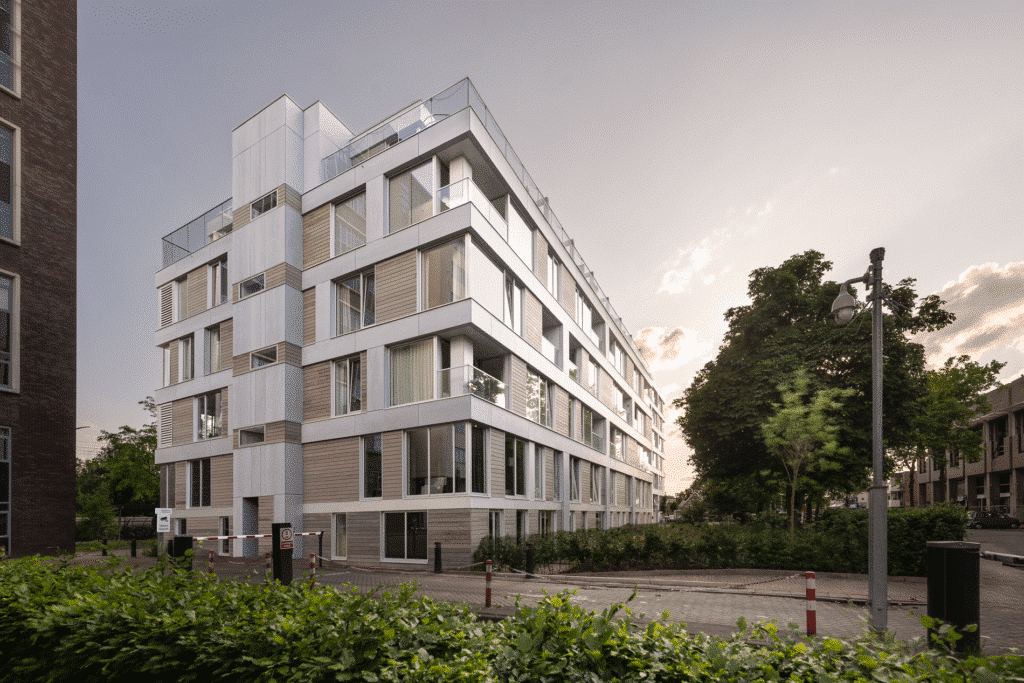
The former UWV office on Prinses Beatrixstraat in Hengelo was largely vacant for years. Instead of demolition, Bloot Architecture chose to repurpose it into a residential building with 93 apartments and commercial space in the plinth. Fiber cement panels from Swisspearl were chosen for the new facade, applied within a new grid over the existing concrete skeleton.
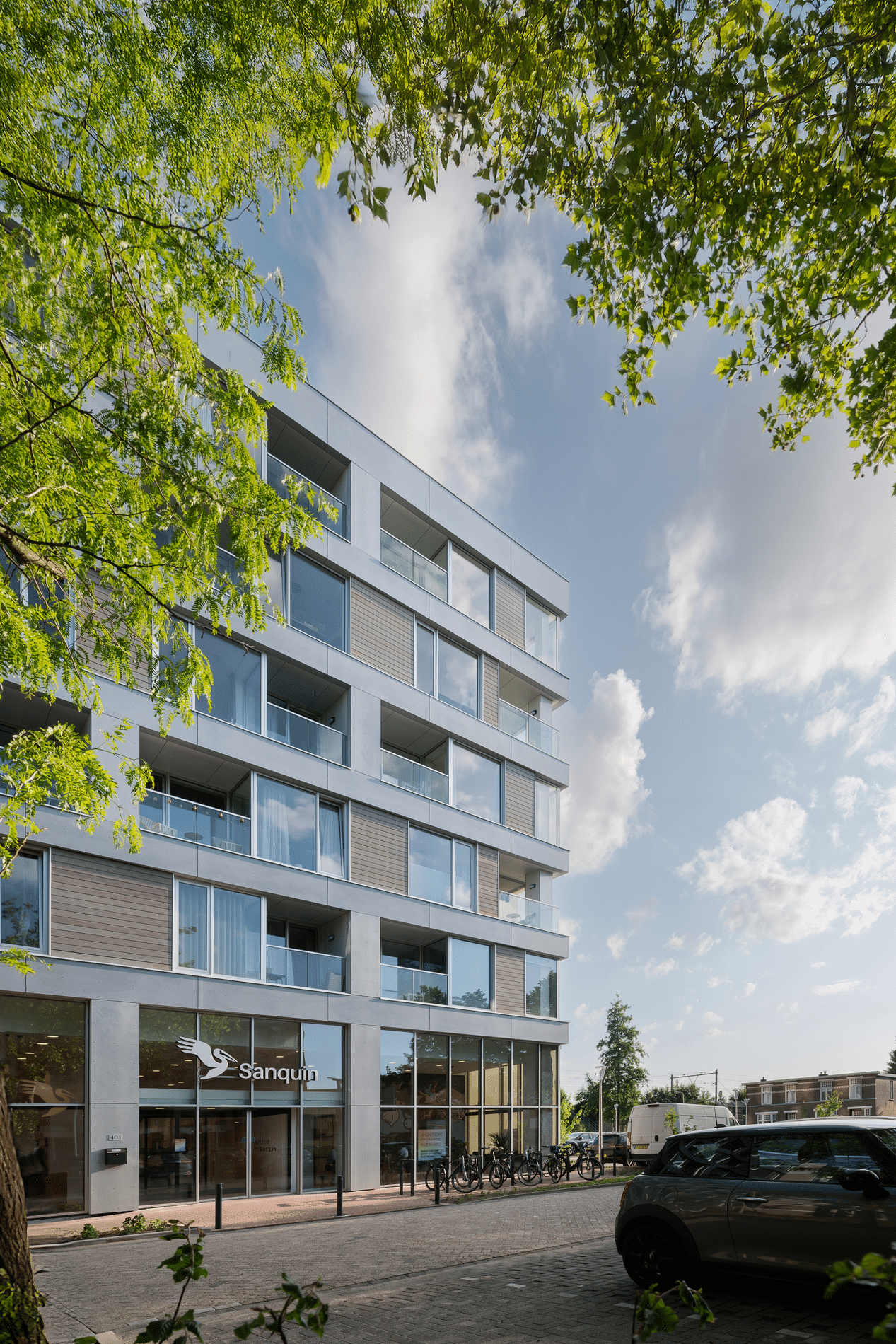
When architect Tjeerd Bloothoofd first analyzed the building, demolition was not an obvious choice. “We knew there was a concrete skeleton. If you strip a building like that, you basically have a blank canvas. That structural quality offers a lot of potential.” The building was dated, the insulation obsolete and an aerial bridge removed, but the support structure proved solid and suitable for transformation.
The step from office to residential required radical spatial choices. The original volume had a strong horizontal articulation and a relatively closed character. At the same time, the developer wanted to realize an efficient program with mainly compact apartments. Daylighting proved especially challenging in the more square building section. “You go quite deep into the building there. Then it's trial and error to maintain quality,” says Bloothoofd.
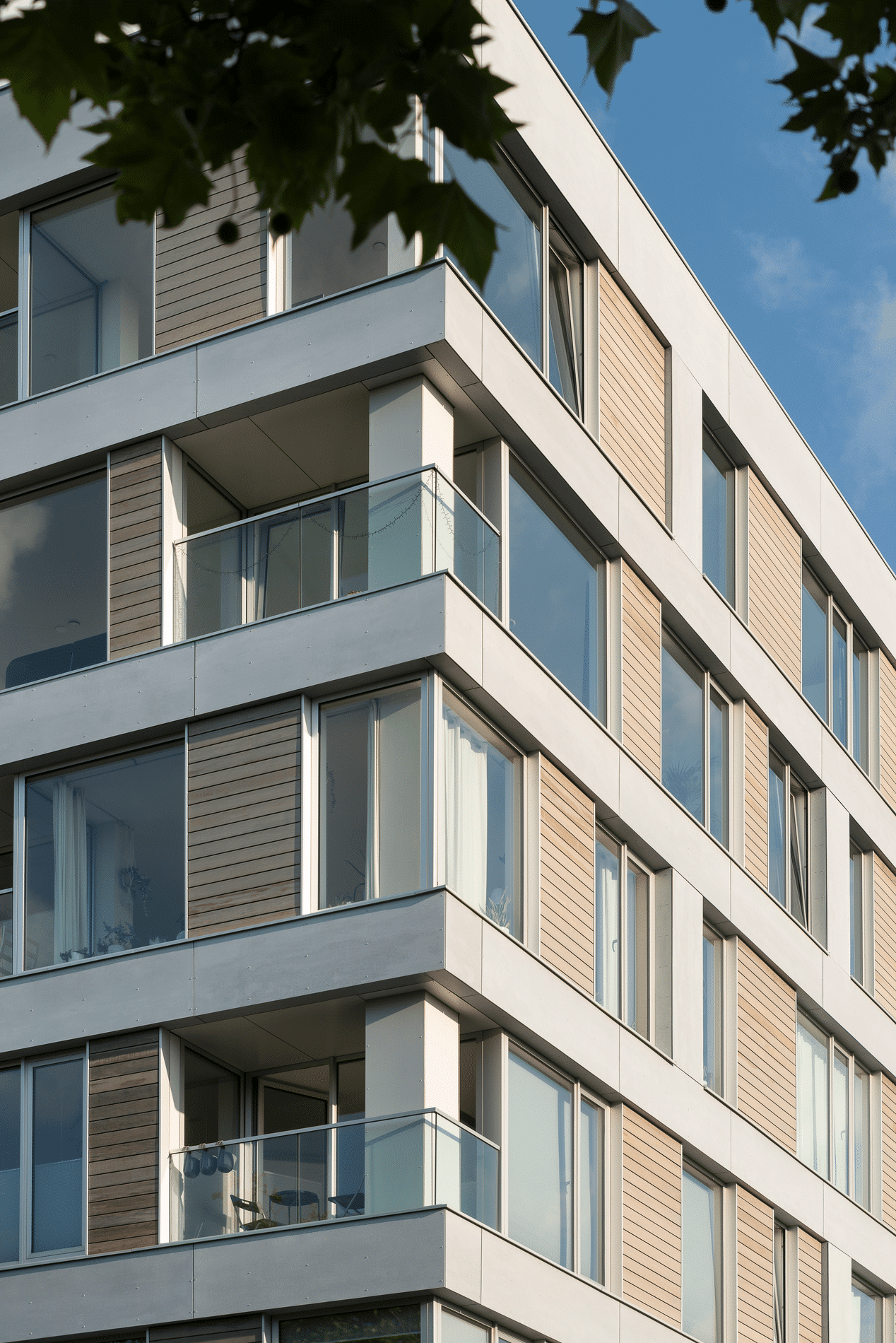
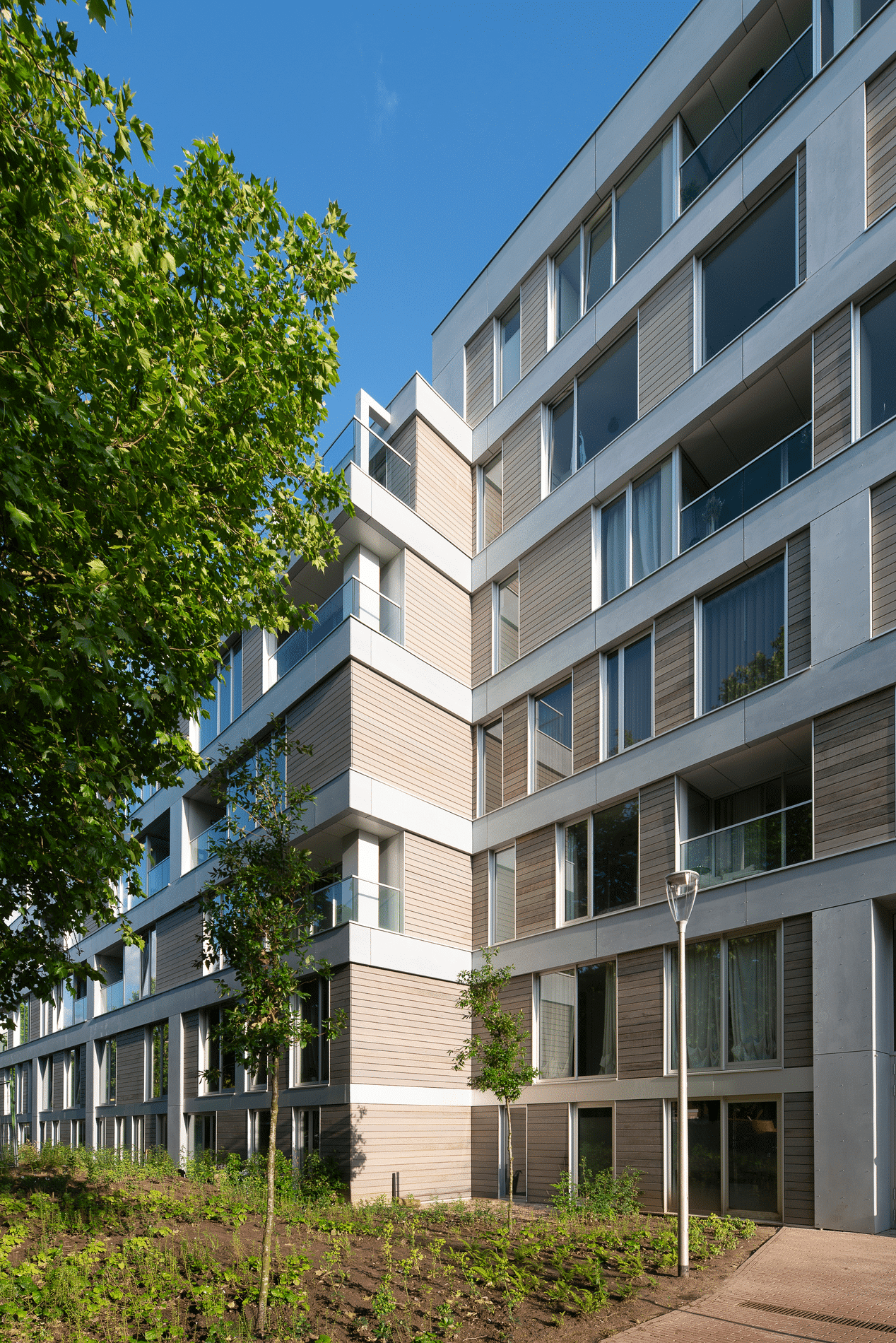
By adding loggias and opening up the first two floors more spatially, each dwelling was given its own outdoor space. Glass corners visually let the lines continue and prevent the volume from closing off at the corners.
A new grid was placed over the existing skeleton that refers to the industrial scale of the railroad zone. Within that framework, freely positioned window frames and staggered openings provide differentiation between the houses.
In the search for a suitable facade infill, not only aesthetics played a role, but also weight and manufacturability within the existing structure. “Initially, we thought of fiber-reinforced concrete,” says Bloothoofd. “But in further elaboration and optimization, we ended up with fiber cement. That gave the same strength in appearance, with more flexibility in processing.”
Approximately two thousand square meters of Swisspearl Patina Original NXT in color P020 was applied for Het Veem. The uncoated, through-and-through colored sheets have visible sanding lines that are consistently placed in the same direction. “I had seen the patina effect on another project and was excited about this.”,
says Barehead. “Each slab is just different. This prevents a repetitive facade appearance. If a facade becomes too uniform, it quickly feels artificial.”
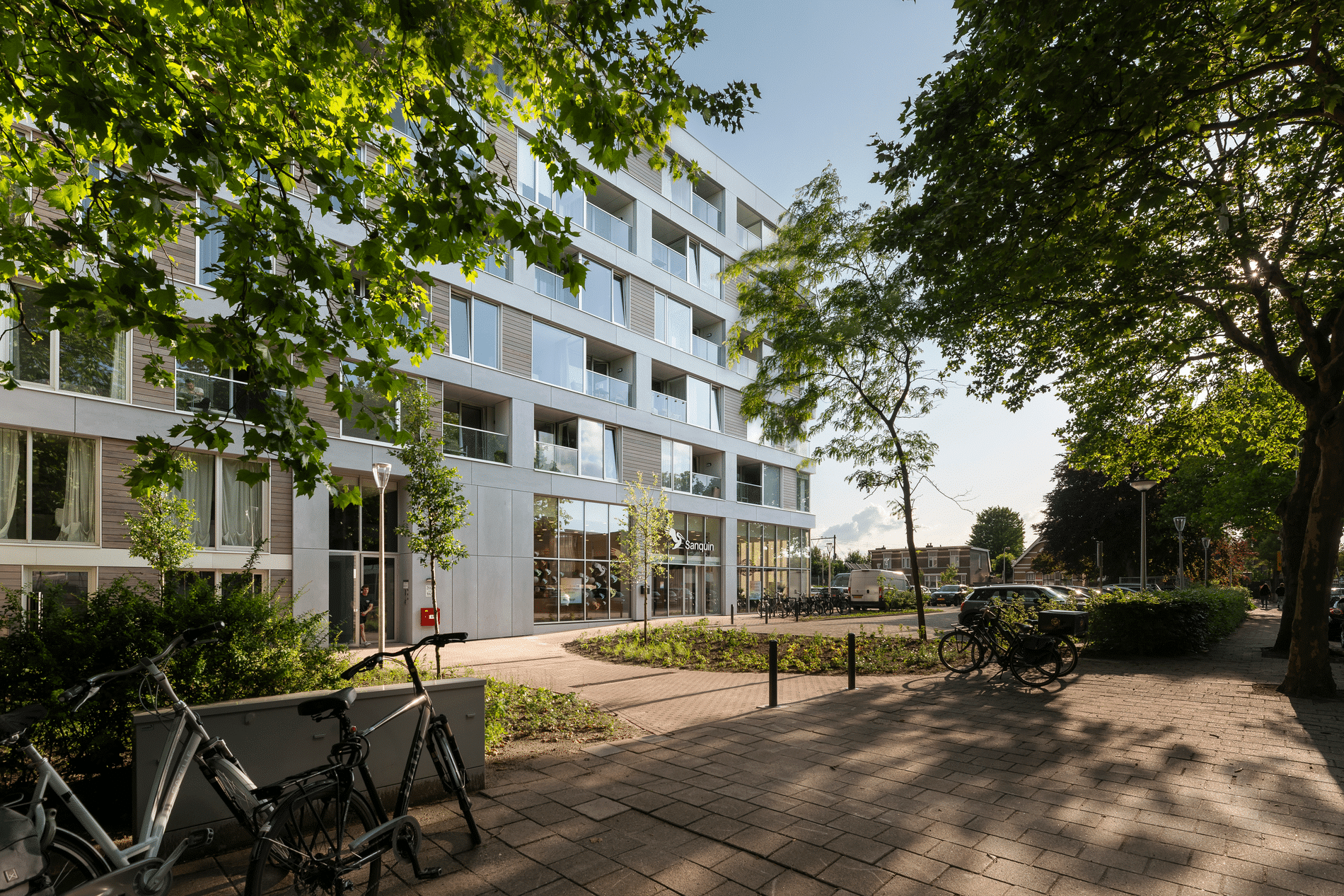
Material in matching color was used for fixing the cladding, keeping the joint appearance calm. The linear structure of the surface reinforces the rhythm within the concrete grid and supports the scale of the building without becoming dominant.
According to Dennis Schoonemeijer, sales manager at Swisspearl, a transformation project requires a careful technical foundation. “You are working with an existing situation. Then you have to demonstrate that the chosen structure meets fire and performance requirements. Many facade systems are tested, so you have certainty about the application within different structural and insulation superstructures.”
Reuse is at the heart of the project. “I am always in favor of not demolishing if it is not necessary,” says Bloothoofd. “There is often still a lot of quality in an existing building. It's about recognizing that value and reusing it.”
Schoonemeijer places the facade choice in a broader development within construction practices. “We are investing in making our production more sustainable and working on certification processes. At the same time, we see that timber frame construction and other biobased systems are more often combined with non-combustible facade panels. By testing these builds, we can demonstrate that they meet the applicable fire classes.”
At Het Veem, this results in an existing concrete support structure with a new, demountably attached facade shell. The combination of structural reuse and a low-maintenance fiber cement finish thus defines the technical and aesthetic premise of the transformation.