Platform on architecture, interior design and landscape architecture
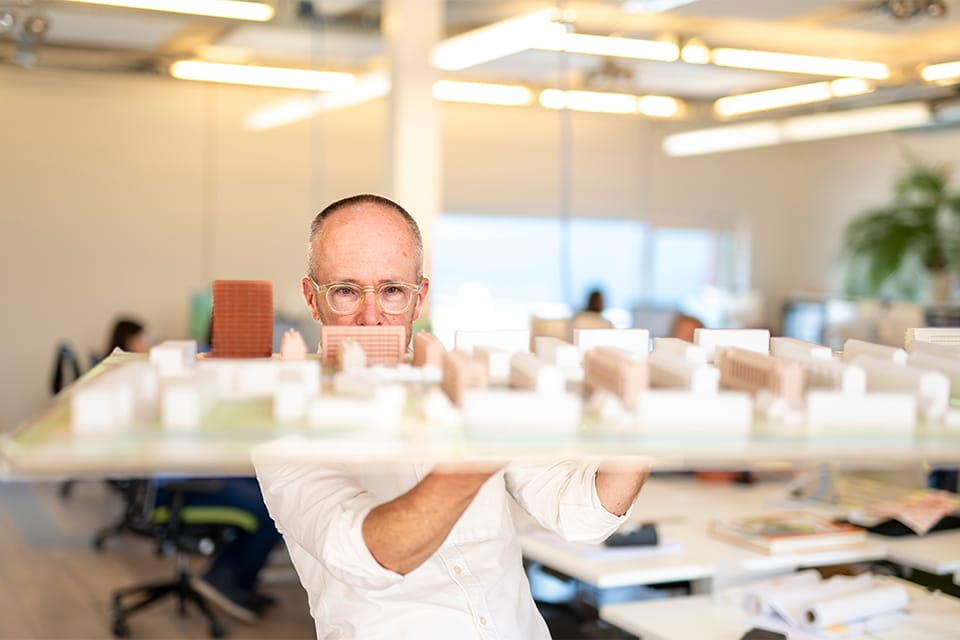
Last year he won the VKG Architecture Prize, this year Merijn de Jong of SOME architects (formerly Men 5 Architects) was on the jury. He has a clear vision of the profession: “It's about people first, then bricks!”
“Of course it was really nice that we won the VKG Architecture Award. But the most important thing was that we were able to draw attention to our project in Amsterdam (De Eenhoorn, ed.). The submission, nomination and winning also proved to be plenty of reasons to have contact with fellow professionals.”
Now Merijn got to (co)judge this year's candidates and their projects. “I had six criteria on which I judged the submitted projects. First, I looked closely at the level of (special) detailing. In other words, is there sophistication in the design. Second, with each submission I was looking for something truly unique. So is there something no one else has. The third criterion I call Social Design. Is it really designed and built for and preferably even in consultation with people?”
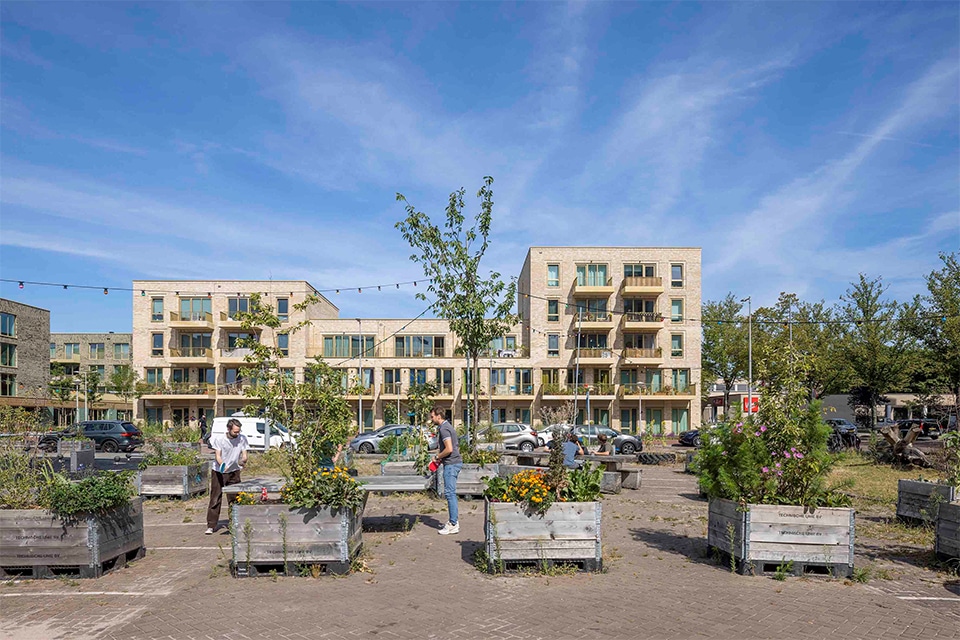
“Obviously, sustainability - that is, durability for the future - is an important criterion. Fifth, I was always looking for the connection the design has with the site. In other words, is there rooted architecture?” Merijn explains that on his sixth criterion, none of the candidates scored a passing grade. “Here I judge on the presence of greenery and nature in the design. Unfortunately, I was not able to give points for any of the entries. I found that a pity. It could have been better as far as I am concerned. This is what these times demand, now and in the future!”
This immediately raises the question of whether an architect in the role of juror can actually be critical of his peers. “Yes, this is the only way to put things on the agenda. I think the presence of greenery and nature is essential. It is one of the basic conditions. And if that is not the case, I will point it out. By making this statement, I hope that I can trigger something or bring about a change. Yes, I believe that entering into a relationship with green space is very important for the success of a design. And therefore for the well-being of the users.”
“Our profession faces some major challenges. For example, there are many more cross-links that we as architects have to take into account. Everything is much more complex and layered than in the past. From sociological aspects to ecological components. From a social zeitgeist to the psychology of man himself. We need that knowledge to design well. In addition, the biggest bump remains the process itself: how do you, as an architect, deal with, for example, the process before you actually start building? And well ... then we also have the emergence of AI. For me, it has become a relevant tool. However, it will change the profession for the better: AI takes processes out of our hands, allowing you as an architect to get right back to the essence: intensive and personal contact with your user, the site and the client to really make the design for them.”