Platform on architecture, interior design and landscape architecture
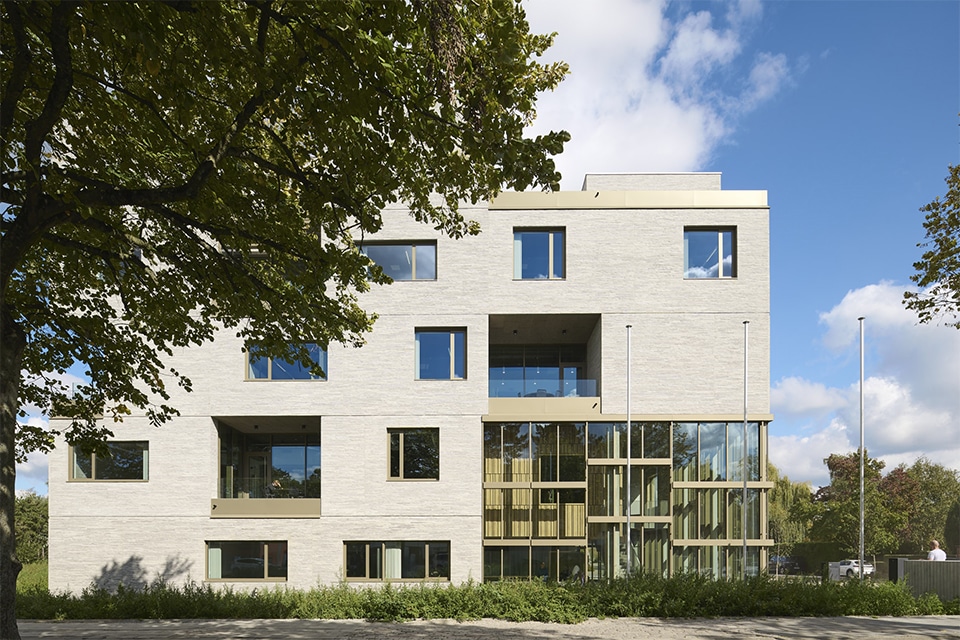
Rough concrete blocks, deep facade openings, and a 7.7-meter-high glass corner facade define the appearance of the new KUBES building on the Ghent University (UGent) Kortrijk Campus. The design by Abscis Architects combines a compact, robust structure with refined aluminum joinery from Aliplast Aluminium Systems in a warm bronze hue. The MC55 curtain wall system was used for the tall corner facade.
KUBES, which stands for Kortrijk UGent Building for Engineering Studies, has been the central building on the Kortrijk campus since late 2025. The complex houses laboratories, offices, classrooms, meeting facilities, and the university’s central services. The design by Abscis Architects is based on a compact cubic volume in which various building blocks are offset relative to one another.
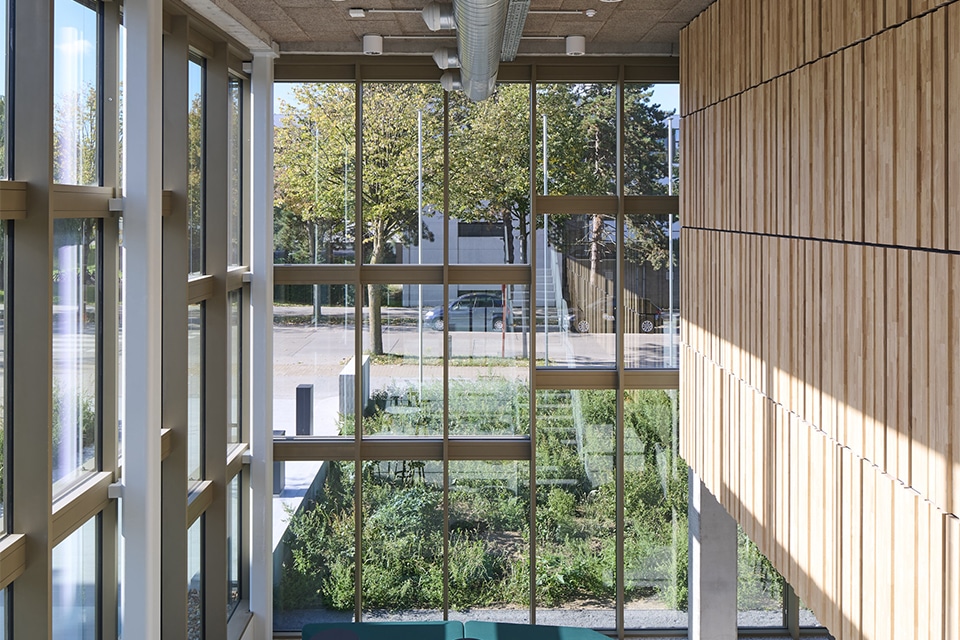
“These shifts create terraces, recesses, and views throughout the building,” says architect Markus Hanssens. “At the same time, we wanted to design a building that looks solid and distinctive, without coming across as aloof.”
That balance between massiveness and openness is also reflected in the design of the facade. The architects combined a rough-looking concrete brick with aluminum joinery from Aliplast Aluminium Systems in the color Middle Light Bronze. According to Hanssens, the joinery was not meant to create a stark contrast with the gray facade brick, but rather to contribute to a more serene overall appearance.
“We wanted the openings and the sense of depth in the facade, in particular, to create the contrast,” he says. “That’s why we deliberately chose a warm, matte shade with less glare. It looks more robust and better suits the character of the building.”
According to the architect, the finish of the aluminum also played an important role in the final appearance of the facade. “With anodized aluminum, color differences between different production batches can become visible. That is why we opted for lacquer anodizing here, to ensure a more consistent appearance throughout the project.”
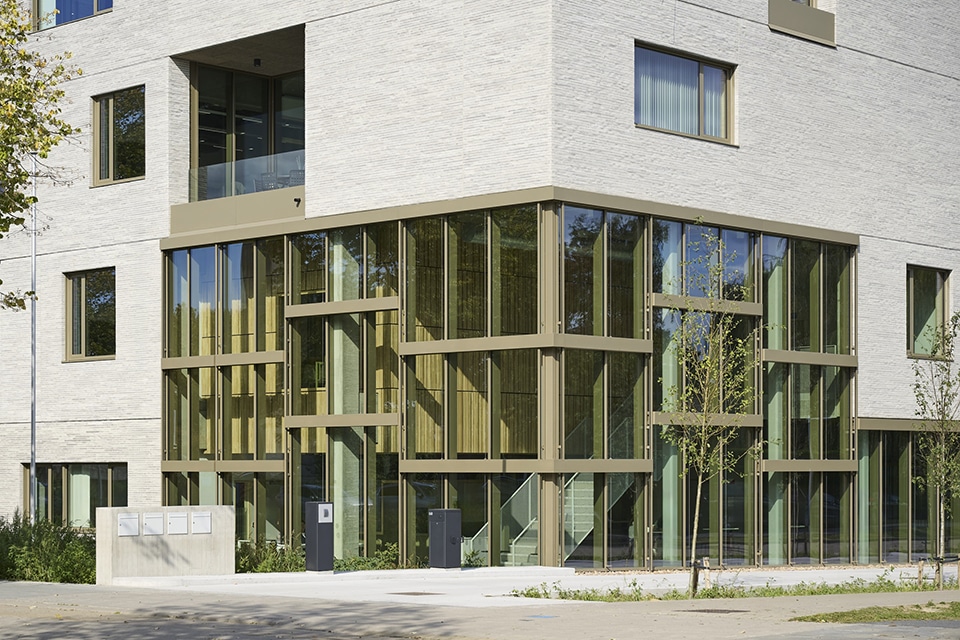
A key architectural element is the double-height glass corner facade in the foyer, constructed using Aliplast’s MC55 curtain wall system. This transparent corner serves as an open counterpoint to the closed sections of the facade and brings plenty of natural light deep into the building. Thanks to its slim face width of 55 millimeters, the aluminum structure maintains a visually understated presence in the facade.
At the same time, this project placed high technical demands on the design of the aluminum window and door systems, which were installed by Bekaert Building Company. The glass section spans a height of 7.7 meters without intermediate supports. To make this span possible, a solution was chosen that involved single-sided clamping and steel anchors at the base of the facade structure. This allowed the facade to retain its sleek appearance.
Production also presented additional challenges. For example, extrusion lengths of eight meters were used for this project instead of the usual seven meters.
Alexander Morel, project support manager at Aliplast Aluminium Systems, was involved in the technical project development. “Thanks to the short lines of communication between design, extrusion, and construction, we were able to adapt fairly quickly,” he says. “In addition, the connection of different levels in the facade required extra attention due to the sloping bottom rails.”
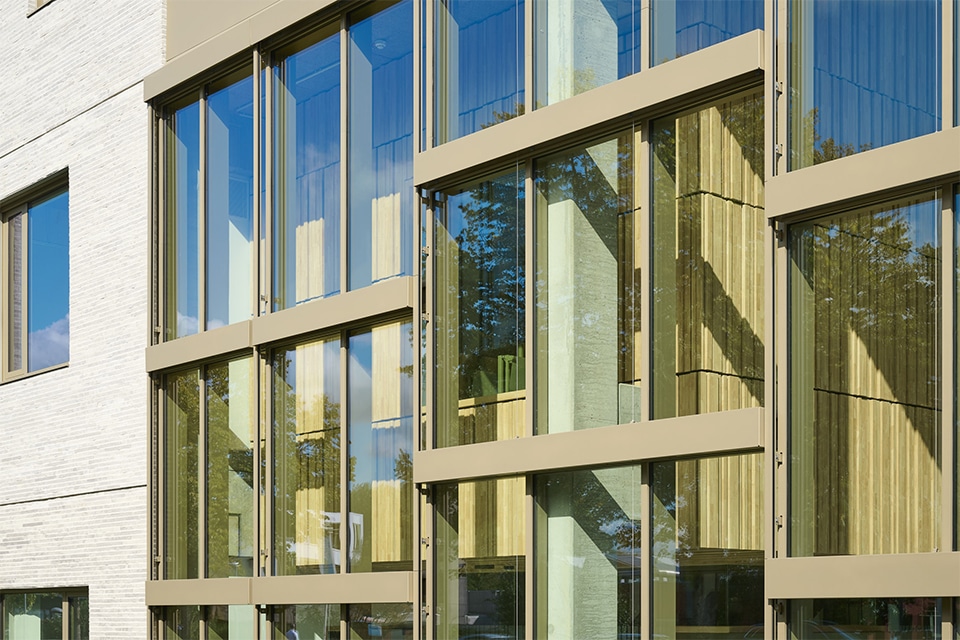
In addition to the large glass surfaces, the rhythm of the columns and horizontal lines also plays an important role in the façade’s appearance. Abscis Architects deliberately opted for an alternation between parallel and staggered lines. This gives the facade a greater sense of depth and nuance. According to Marc Mulders, sales manager for the Netherlands, the MC55 system meets the demand for larger glass surfaces with the slimmest possible profiles. “Architects want to combine increasingly larger glass surfaces with a refined facade design. The limited face width of 55 millimeters helps to enhance that transparency.”
Neem dan rechtstreeks contact op met Aliplast NV.
 Contact opnemen
Aliplast doesn't outsource anything! Everything happens under one roof: from idea to mold drawing, from press post to extrusion, from surface treatment to coating the profiles, from insulating and packaging to taking care of transport to manufacturers of windows, doors, verandas, sliding systems and curtain facades in Belgium, France, the Netherlands, Germany, Switzerland, Sweden, Denmark, Norway and Portugal. [...]
Bekijk Bedrijfsprofiel