Platform on architecture, interior design and landscape architecture
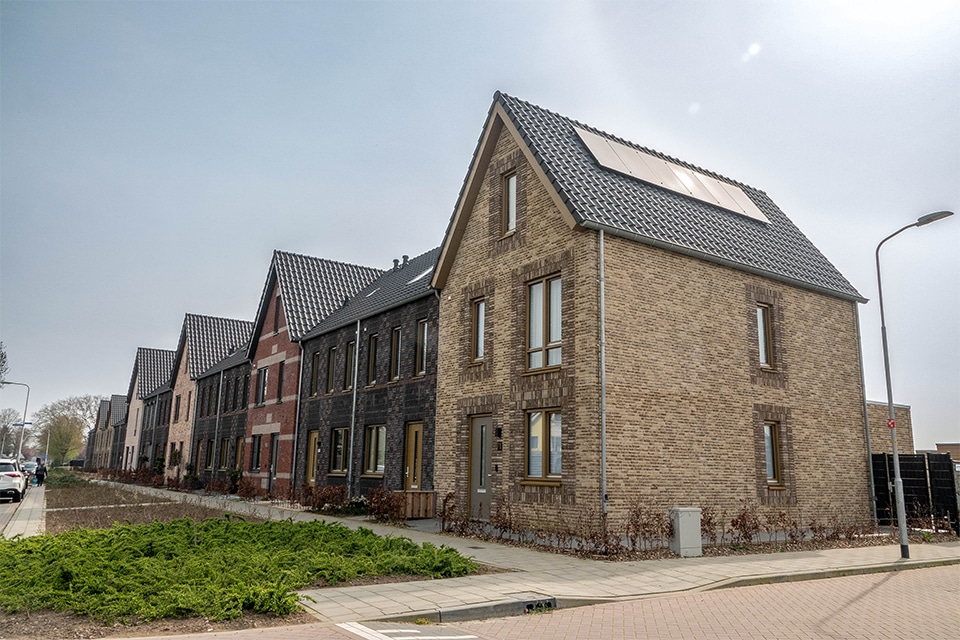
Prefabrication is still often associated with standardization and limited design freedom. Yet Spaansen Bouwsystemen demonstrates that there is another way. With an industrially manufactured facade concept that combines concrete, insulation, and ceramic brick slips, the result is a facade that is virtually indistinguishable from traditional masonry. At the same time, the system actually offers plenty of scope for variation in color, bond patterns, and detailing.
Spaansen is celebrating its 80th anniversary this year and developed “Gevelklaar” in 2020: a comprehensive solution that adds fully finished facades to its trusted concrete shells. This speeds up construction, lowers costs, and reduces CO2 emissions. “And all while maintaining quality and an authentic look,” says Thom Spaansen, the youngest member of the third generation in this family-owned business and responsible for the production of Gevelklaar.
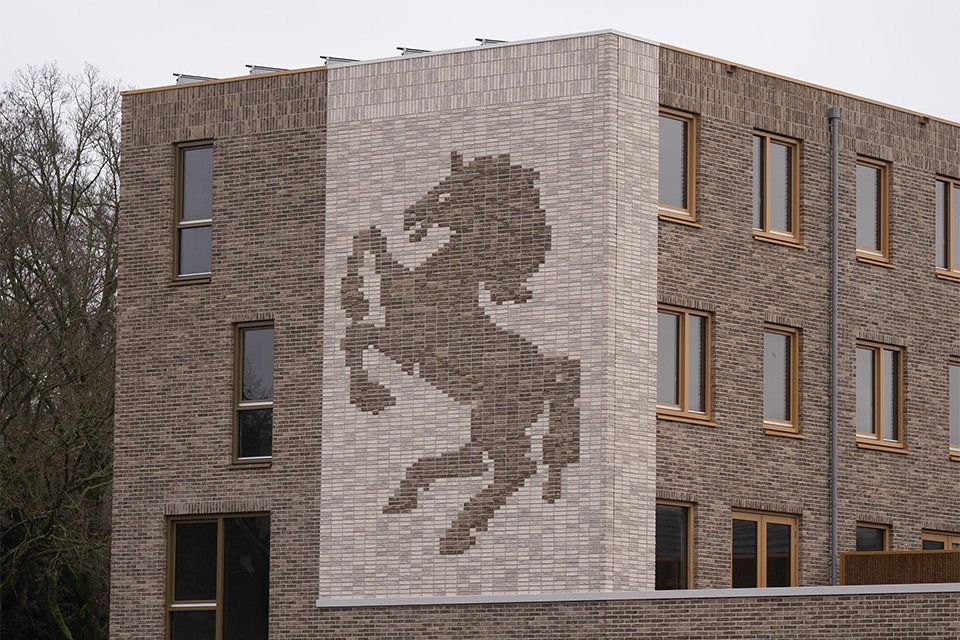
“Many people know that we use prefabricated construction, but they’re still surprised when they see that these are complete facades, including window frames and finishes—and that they look like traditional masonry,” adds Commercial Director Aike Minnes. “That’s often a key requirement for architects.”
The biggest misconception about prefab facades is that they limit design options. “We’re not limited to standard sizes in production,” Minnes explains. “We can create various patterns—horizontal, vertical, block, stacked, interlocking, etc. It’s even possible to incorporate shapes into the facades. In addition, there’s flexibility in colors and thicknesses: even at the element level.”
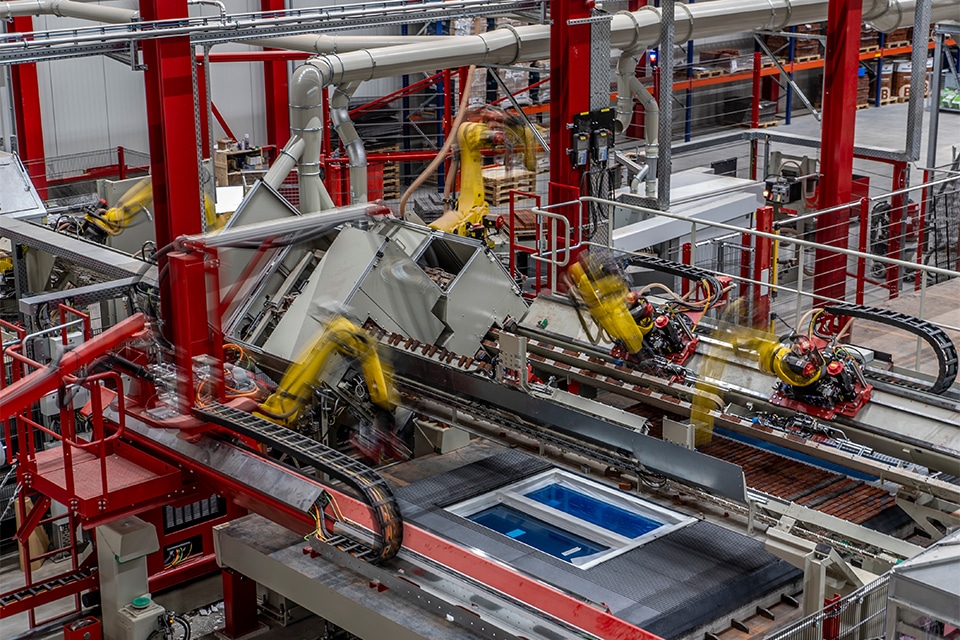
This flexibility is made possible in part by the automated production process, in which the eight robotic arms at the Gevelklaarfabriek can handle multiple variables simultaneously. “Within a single project and within clear parameters, different facade designs can therefore be combined without this immediately leading to complex implementation issues or additional costs, as is the case with traditional masonry,” says Spaansen. “This creates a unique facade design.”
A key part of the system is the partnership with brick supplier Vandersanden from Belgium, which supplies both the brick slips and the adhesive. “For us, working with just one supplier isn’t a limitation: they offer a wide selection of about seventy different types of brick slips, which allows for a great deal of variety. Plus, this enables us to guarantee quality,” says Spaansen.
Spaansen recently earned KOMO certification for its Gevelklaar product, which underscores its high quality standards. The company is also continuously working on further development: “All the knowledge we’ve gained in recent years, together with our partners in the construction industry, contributes to an improved product and production process,” says Minnes. Spaansen emphasizes the importance of collaboration with contractors: “That’s how the concept began, and that’s how we continue to adapt it based on market demand. We’ve now achieved good continuity and better control over output, allowing us to provide even better support for the volume of construction projects.”
In addition, the company is taking steps toward sustainability with new production techniques and eco-friendly products such as the Eco Wall sustainable concrete wall. Brick supplier Vandersanden has developed “ecostrips” that reduce cutting waste and is working on compressed “pirouette” bricks: a product that absorbs CO2 during production and does not require firing. In addition to the short construction time, reduced failure costs, and high insulation values (an Rc value of 5.4, while 4.5 is required), Gevelklaar is exceptionally well-suited for current and future construction projects.
Gevelklaar is increasingly being incorporated into preliminary designs because it combines design flexibility with a traditional look. “We’re now approaching 4,000 homes that have been completed using Gevelklaar,” says Spaansen. And that number is only growing: from single-family homes to semi-detached homes and from townhouses to senior housing. “And because we’ve got the fire resistance requirements well under control, Gevelklaar can also be used in the construction of apartment buildings up to 21 meters high,” concludes Minnes.