Platform on architecture, interior design and landscape architecture
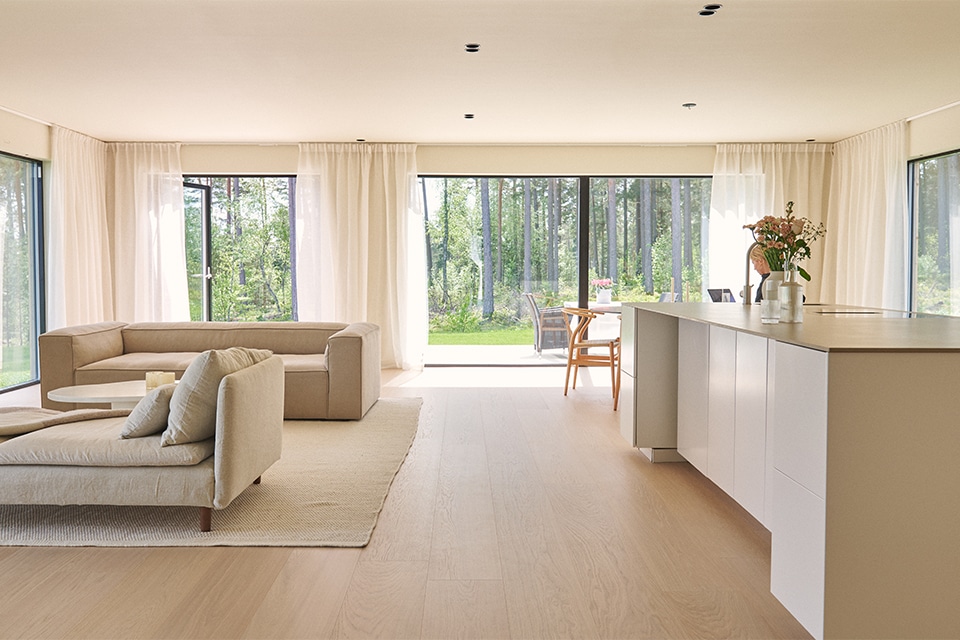
We’re increasingly longing for nature indoors, but how does that affect the floors beneath our feet? Have you noticed that when you step into a space that feels pleasant, you sense it even before you actually see the space? The air feels calmer. The light is softer. The materials invite you to slow down. That’s biophilic design in action.
“Biophilic design goes beyond adding a few plants or opening a window,” says Hannes Boman, Head of Design at Bjelin. “It’s about how a space feels in your body; it’s about connecting interiors with patterns, textures, and rhythms that we associate with nature.” In a world where most of us spend more than 80% of our time indoors, that connection seems essential.

Although walls and furniture often receive a lot of attention, the floor plays a disproportionately large role in how a space looks and feels. „The floor is the surface with which we are constantly in contact, both visually and physically,“ explains Hannes Boman. „And in a biophilic context, the floor serves as the anchor point for the entire space.“
Choosing a material that reflects natural variation creates a foundation that feels authentic. „Wooden floors, in particular, align closely with biophilic principles,” says Hannes Boman. „The organic patterns create subtle irregularities, something our brains instinctively recognize as natural.” Unlike uniform surfaces, wood changes under the influence of light and use, giving it more depth over time.
A defining feature of biophilic design is the move away from overly processed, uniform materials. Instead, there is a growing preference for surfaces that reflect how materials occur in nature.
”Biophilic design inherently takes a ‘cradle-to-grave’ approach, taking into account every stage in the life cycle of a product or space,” says Hannes Boman. „From responsible sourcing and natural materials, through thoughtful use and human well-being, to sustainability, reuse, and end-of-life impact.”
In the past, the goal was perfection: no knots, no variation, and a uniform color. „Now we’re seeing the opposite,” explains Hannes Boman. „People want materials that feel authentic. Slight variations in shade or texture make a space feel more alive.”
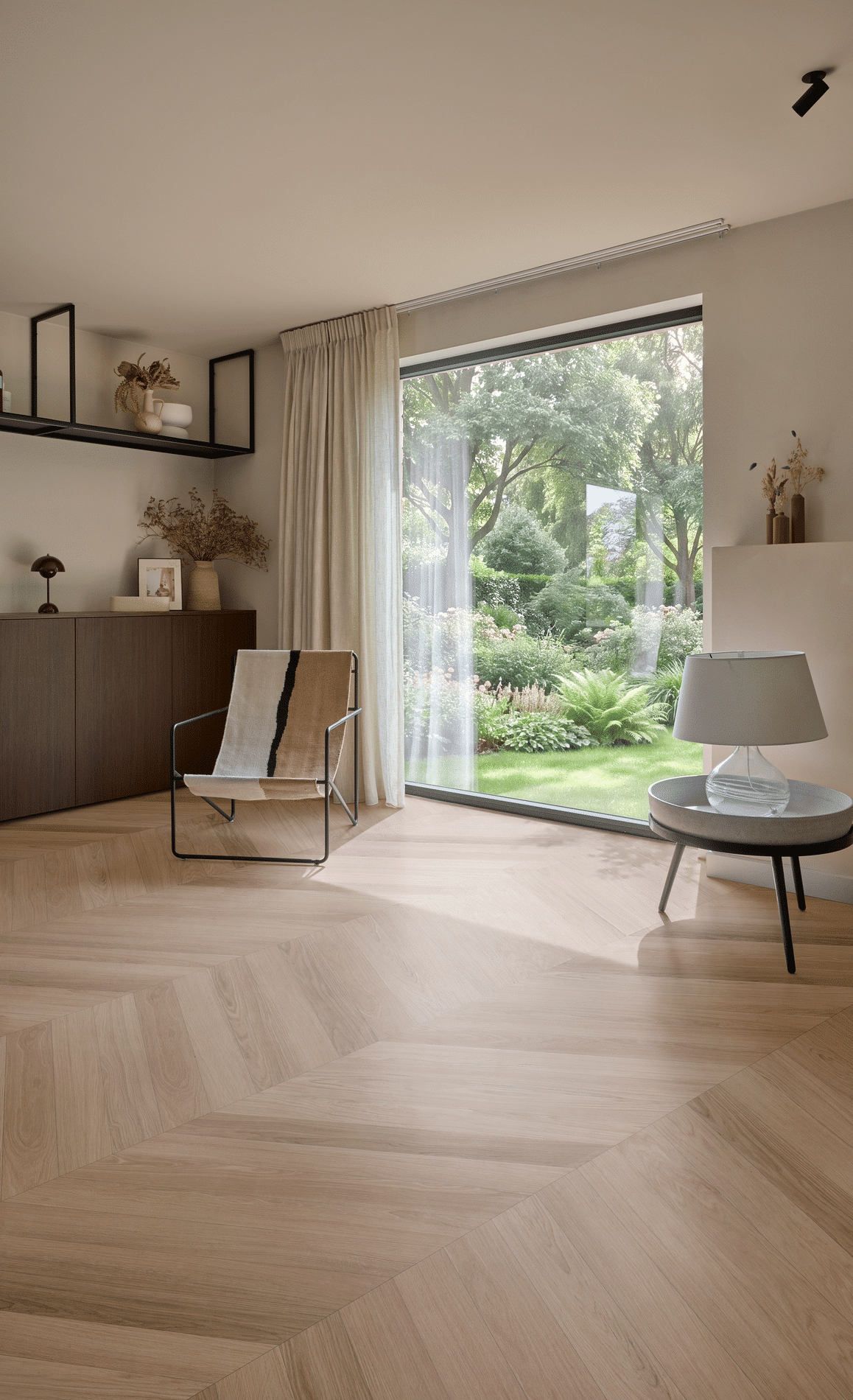
This shift has direct implications for flooring choices. Natural tones and vibrant color gradients are gaining popularity. Lighter, freshly sawn finishes can provide a fresh, calm foundation, while warmer tones add depth and a sense of comfort.
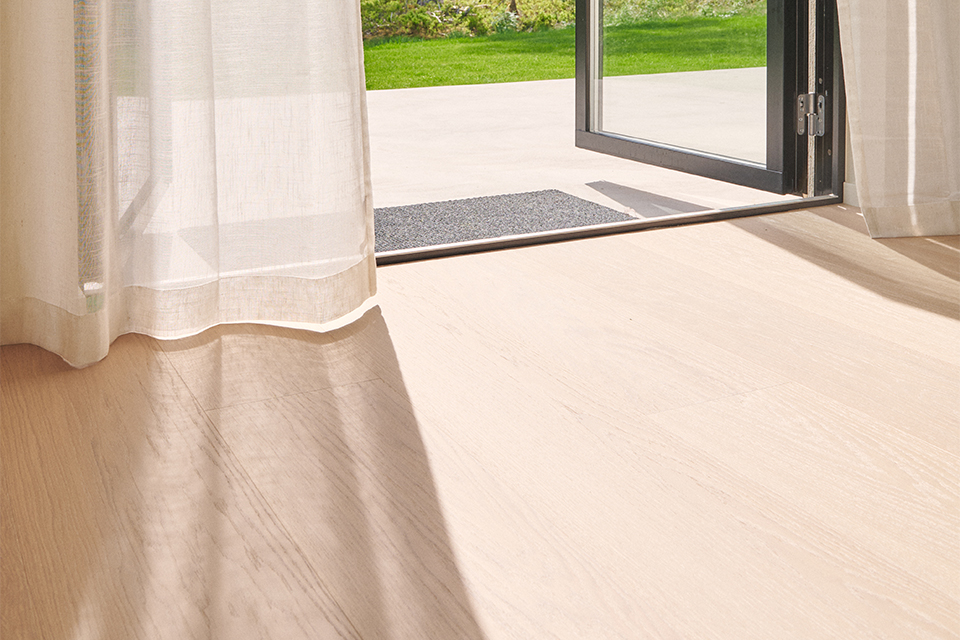
Biophilic design is also about how spaces interact with light, and the floor plays an important role in this. Lighter surfaces reflect daylight, creating a more open and airy feeling. At the same time, subtle variations ensure that the floor doesn’t feel flat or sterile.
„A good floor complements the space,” notes Hannes Boman. „As the light changes throughout the day, the surface should vary slightly along with it. That gives a space a sense of rhythm.” This dynamic quality becomes particularly important in interiors where natural light changes drastically with the seasons.
We must also consider how spaces are used. There is a growing demand for surfaces that combine sustainability with a natural look. “Biophilic design isn’t fragile,” says Hannes Boman. “It has to work in real homes, with real people. The materials must be both resilient and visually authentic.”
Ultimately, biophilic design is all about cohesion. Every element contributes to a sense of balance between the built environment and the influence of nature. The floor, as one of the largest surfaces in any interior, plays a crucial role in that relationship.
“If the floor is right, everything else falls into place,” says Hannes Boman. “It creates a foundation that radiates calm, stability, and a sense of connection. That’s what people respond to, even if they can’t immediately explain why.”
In summary: natural materials, variations in texture, and the way light falls on surfaces create a sense of calm and connection.