Platform on architecture, interior design and landscape architecture
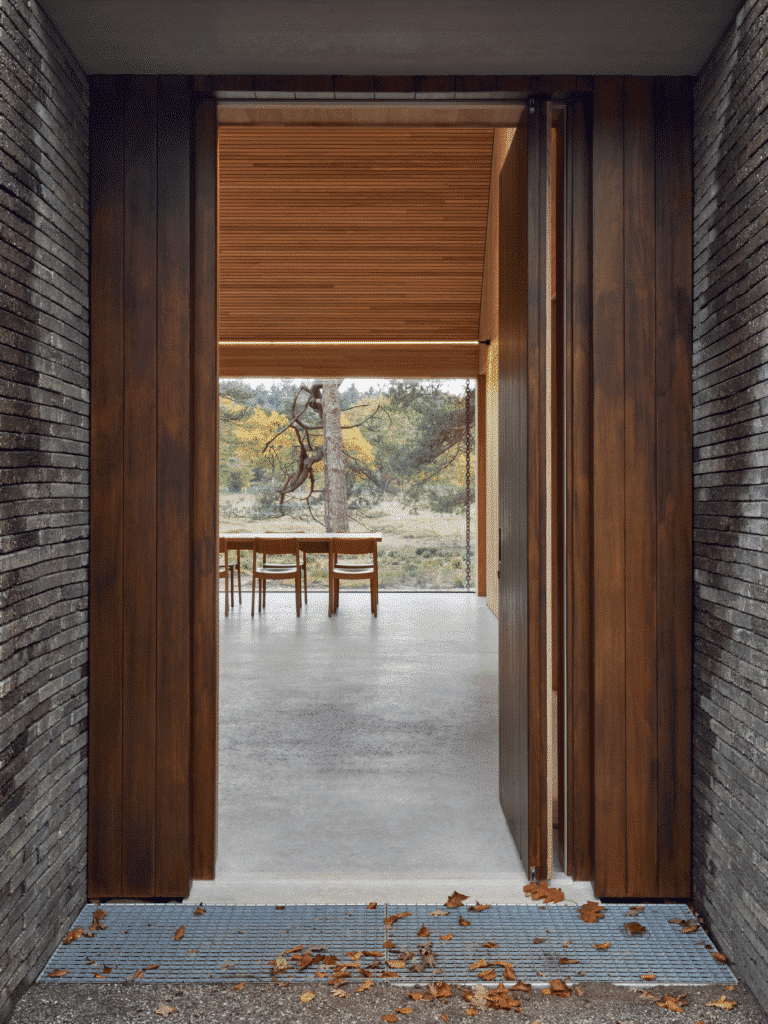
On Table Mountain in Blaricum, at the highest point of ’t Gooi, stands an inspiring new office building that blends harmoniously into the ancient heath landscape. Rather than nature having to make way for this new building, architect Max Verhoeven of Studio Massimo has clearly been inspired by the flora and fauna in the area. But also by the longhouse farms and common eaves heights in the area as well as the experiential value of the historic plaggenhutten. The new office building has a unique but recognizable shape, in which a varied mix of native plants flows imperceptibly into the roof. As if it grew out of nature itself.
“Initially, the idea was to build two villas on Table Mountain,” Verhoeven says. “In 2018, however, the plot was sold to a developer, who changed the zoning to an office building. To create sufficient support for this zoning change, the idea quickly arose to use the special place and the protected illusion landscape with its distinctive moraines as a starting point. The shape of the plaggenhut fits this perfectly. On the entrance side of the hiking area, the roof of the new building extends to the retaining wall, which is constructed of recycled gravel tiles. About thirty centimeters of substrate allow the planting here to become full and mature, so that the building will soon almost disappear into nature.” On the southwest side, on the other hand, the building is more open, with a quiet interior finish giving nature all the attention it deserves.
“At Studio Massimo, we believe that ‘form follows nature,’” Verhoeven emphasizes. “Circular construction, biobased building and greening are at the heart of our design process. We design architecture with meaning and simplicity, where the design works closely with the environment. The office building on Table Mountain is a great example of this, providing a new habitat for people, plants and animals.”
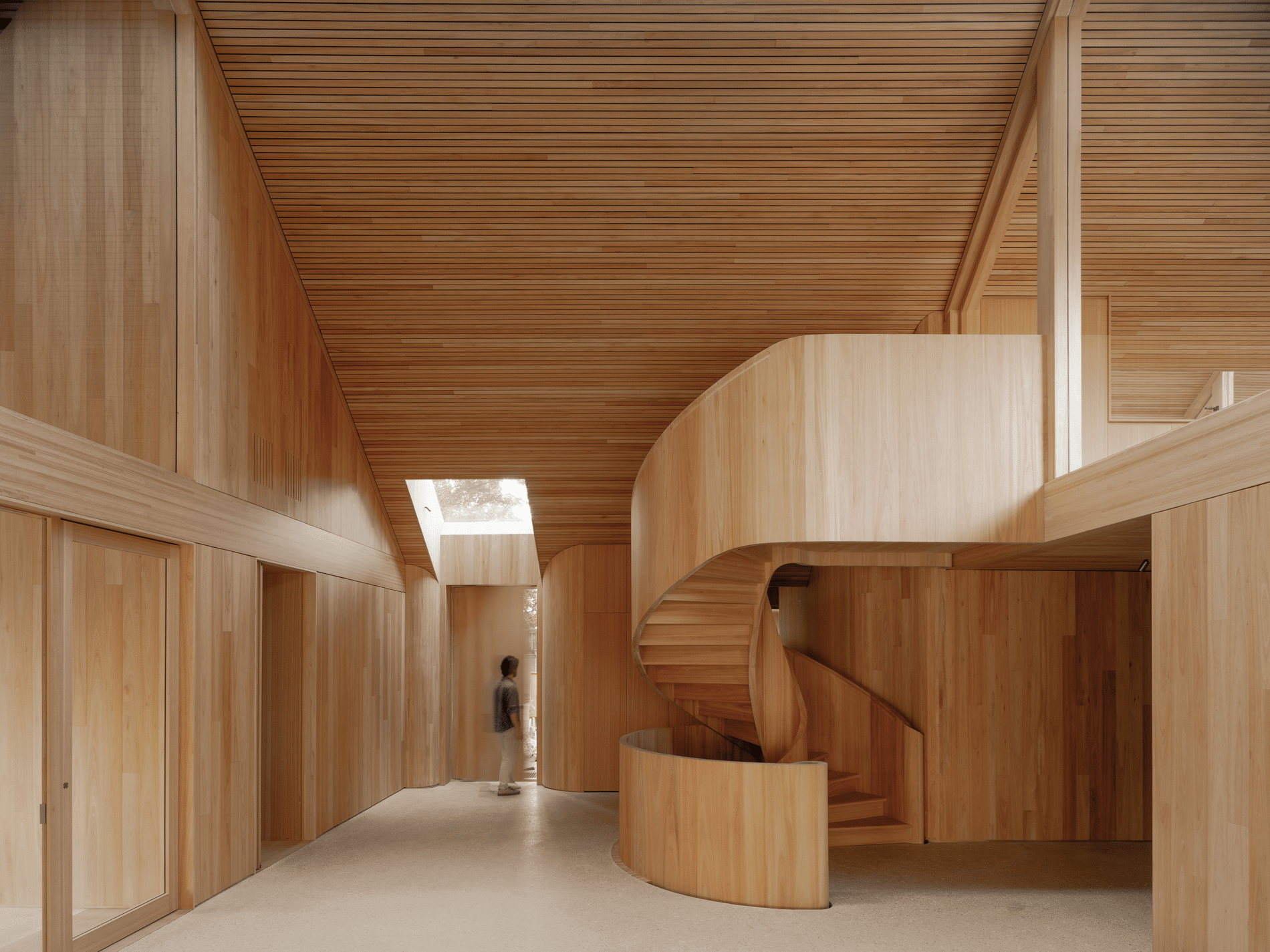
“Our design process started with nature, what lives in and around the building and what we can usefully add to it,” Verhoeven says. Both in terms of flora and fauna. We added walls of old and weathered stones, for example, to create sufficient resting space for viviparous lizards. In addition, small holes were made in the building's overhangs to house butterflies and other insects. We also used more than a hundred species of native and organically grown plants. By combining early bloomers, long bloomers and autumn bloomers, we create sufficient food for the bees in the area throughout the year. In addition, this adds to the attractiveness of the landscape.”
The facade of the office building is clad in real poplar bark. “In order to maintain tranquility, the main load-bearing structure, wall and ceiling finishes, cabinets and doors are done in one warm, light and FSC-certified type of wood. In doing so, by overcoming contrasts and eliminating or obscuring disruptive elements such as light switches, ventilation grilles, door hinges and door hardware as much as possible, the focus is completely on nature.”
For the entrance of the office building, Studio Massimo designed a stylish pivot door with Fraké Noir wood on the outside and Red Grandis on the inside. In addition, the building features thirteen pivoting interior doors, most of which are glass doors with a Red Grandis frame. The choice of pivot doors is a logical one, according to Verhoeven, because of the fine flow they create. “The doors create a natural flow through the building. Because the doors are aligned and largely made of glass, a very fine vista of no less than 34 meters is created. It also allows maximum daylight to flow in.”
A 90-degree hold-down position here ensures a dead straight opening, giving the design even more momentum, says FritsJurgens project manager Jeroen Iemhoff. “Instead of using hinges on the wall, the doors rotate very invisibly and solidly on the vertical axis thanks to the System M+ hinges. For mounting, only a 40 x 80 millimeter ceiling and floor plate need to be attached. This allows architects and designers to be very free in their designs.”
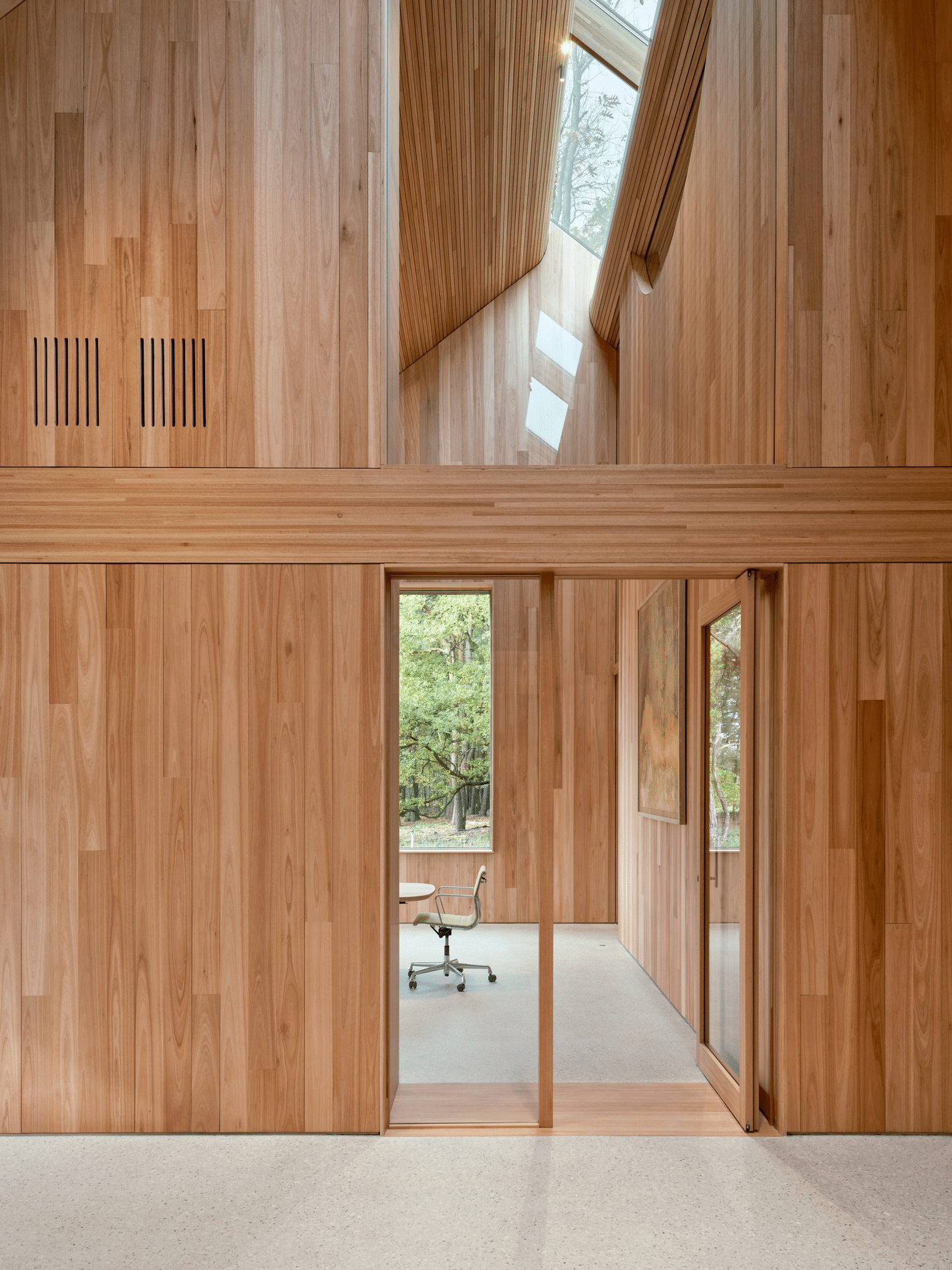
On the advice of FritsJurgens, the production of the pivot doors was carried out by Broporte exclusive doors. “Because of the office function of the building, in addition to form and function, special attention was paid to acoustics,” Iemhoff says. “Because pivot doors do not normally connect tightly to the wall, floor and/or ceiling, they are less sound-absorbing. In this project, we found a solution for this by installing special drop sills at the top and bottom of the doors. As a result, the office doors are perfectly acoustically sealed. Because our hinges are excellently adjustable in closing force, the fine operation and excellent closure are retained in the process.”
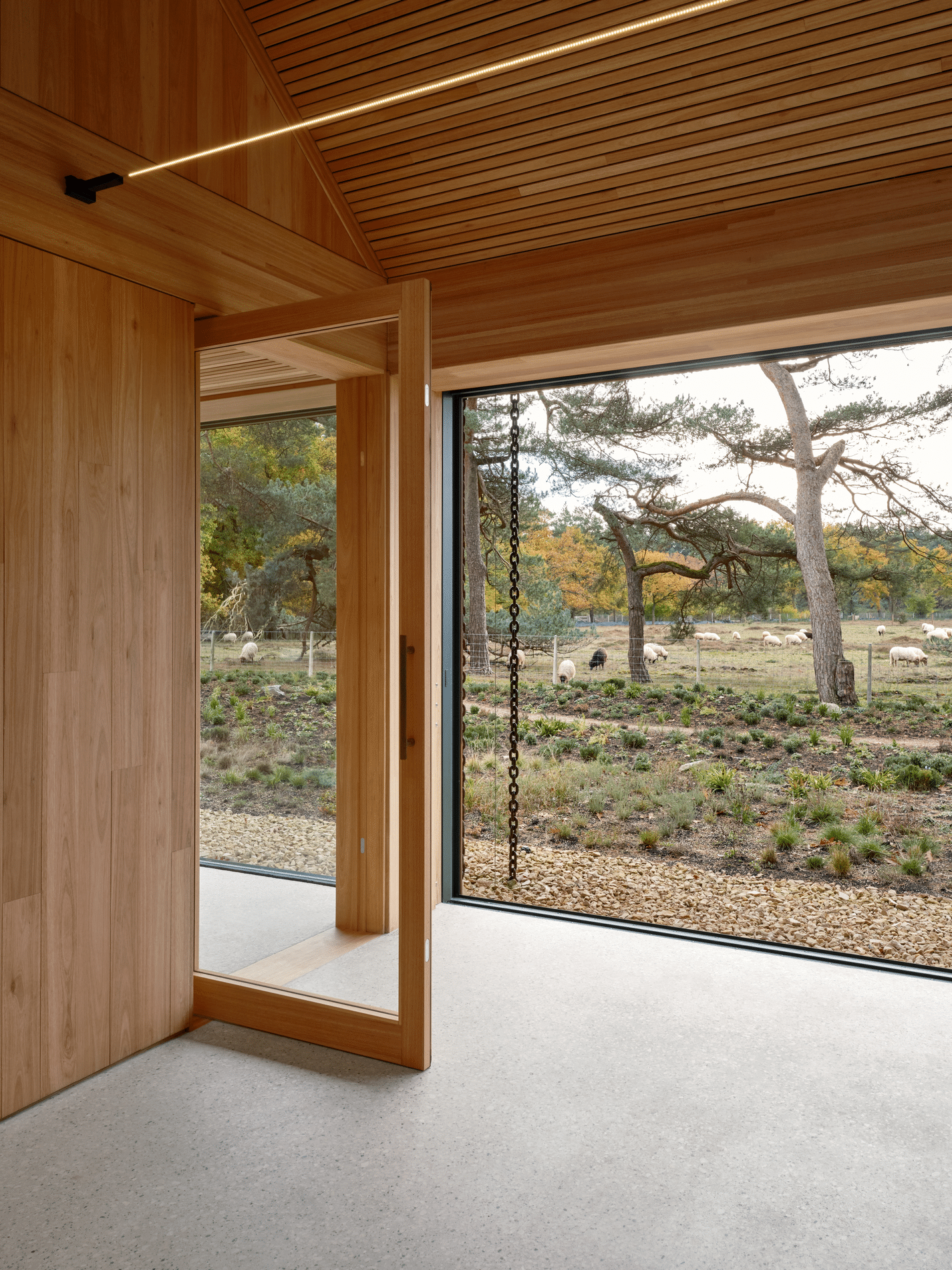
During FritsJurgens‘ Best Pivot Door Contest 2026, an independent international jury of architectural firms (including Arup, Bjarke Ingels Group (BIG), Foster + Partners, KAAN Architects and Zaha Hadid Architects) awarded the pivot doors of the Tafelberg office building as ’Best Pivot Door Interior 2026," thanks to its architectural coherence, refined execution and subtle way in which the movement contributes to the atmosphere.
Neem dan rechtstreeks contact op met FritsJurgens.
 Contact opnemen
We are innovators We dream of a world full of ideas. We go to extremes to make your dreams come to life. We are passionate, innovative while remaining brave, authentic and sincere. We believe that technology can change the world and make it beautiful. Our heritage The story of FritsJurgens begins in [...]
Bekijk Bedrijfsprofiel