Platform on architecture, interior design and landscape architecture
More than 125 exhibitors in Utrecht show how new materials are shaping the future of architecture and construction
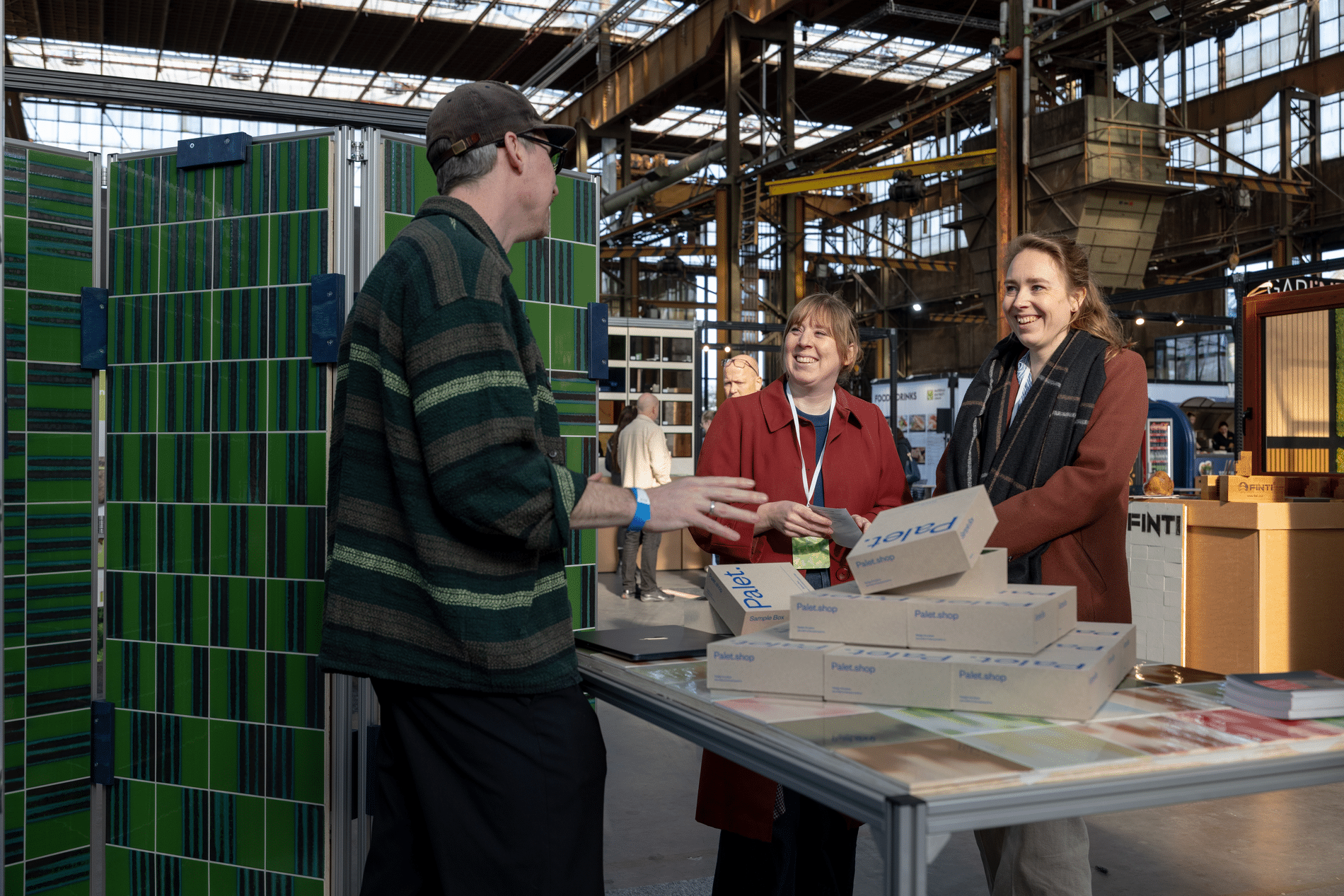
A tile that grows using bacteria, facades made from residual streams of local willow and acoustic panels made from mycelium, seaweed or collagen. With these and many other innovative materials, MaterialDistrict Utrecht once again landed in the characterful Werkspoor cathedral. For three days, from March 4 to 6, the location turned into a dynamic meeting place for professionals from the world of architecture and interior design.
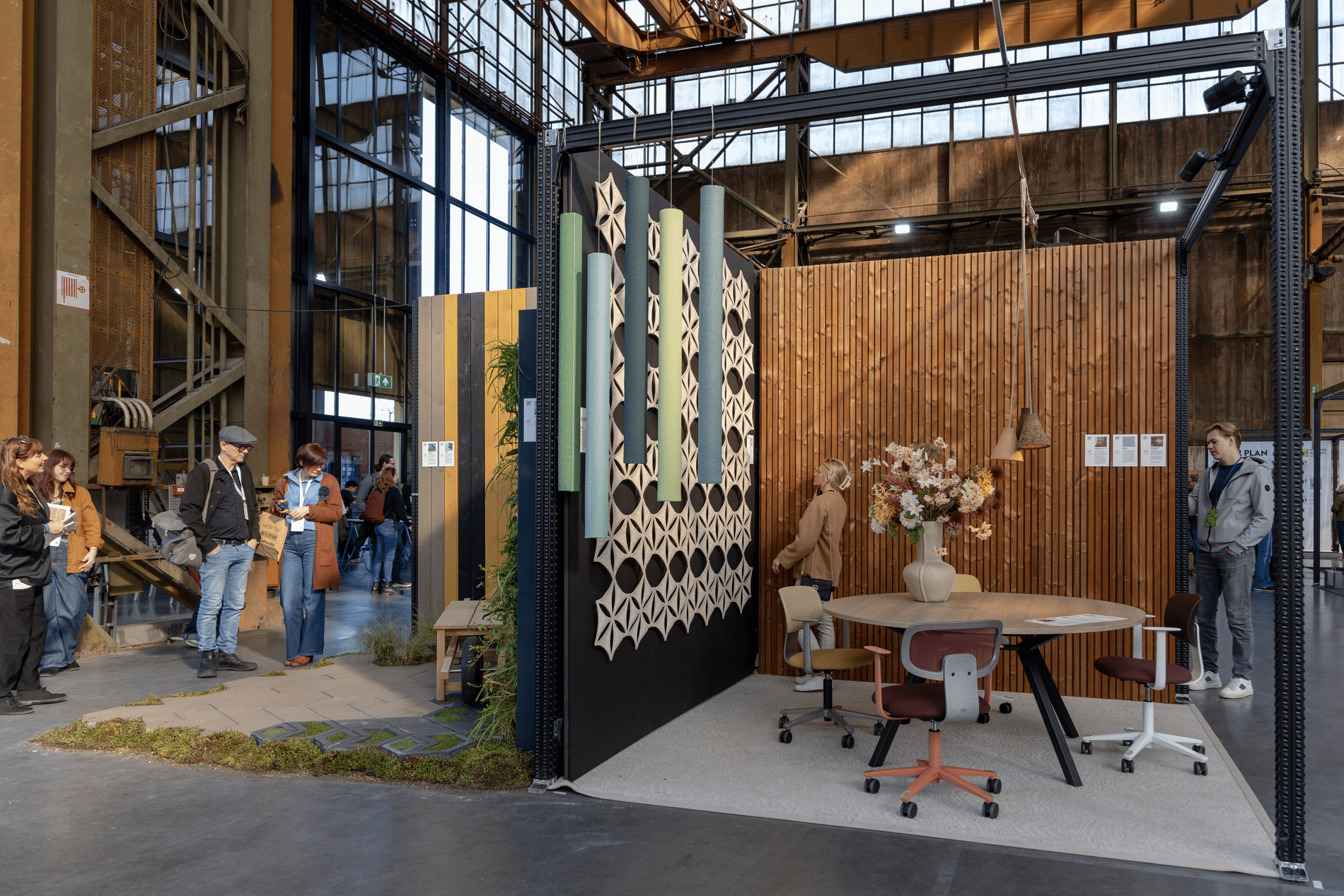
MaterialDistrict Utrecht, now one of the most important European events in the field of material innovation for architecture and design, continues to develop in this regard. Whereas for years the event was primarily a source of inspiration for designers and material scouts, the focus is increasingly shifting to practical application. New initiatives such as the NextNow pavilion, Tomorrow's Timber Talks and the cooperation with the construction company TBI show how material innovations are increasingly finding their way into the construction industry.
It is precisely the combination of inspiration, knowledge exchange and new collaborations that makes MaterialDistrict a regular meeting place for the international materials community. Established producers, startups, designers, researchers and students present their innovations here to architects, interior designers and other professionals from the design and construction sector.
According to director Jeroen van Oostveen, the strength of the event lies in that unique mix of participants. “Nowhere else do you see such a broad combination of companies, startups, designers, researchers and students together. Here they meet, exchange knowledge and create new collaborations.”
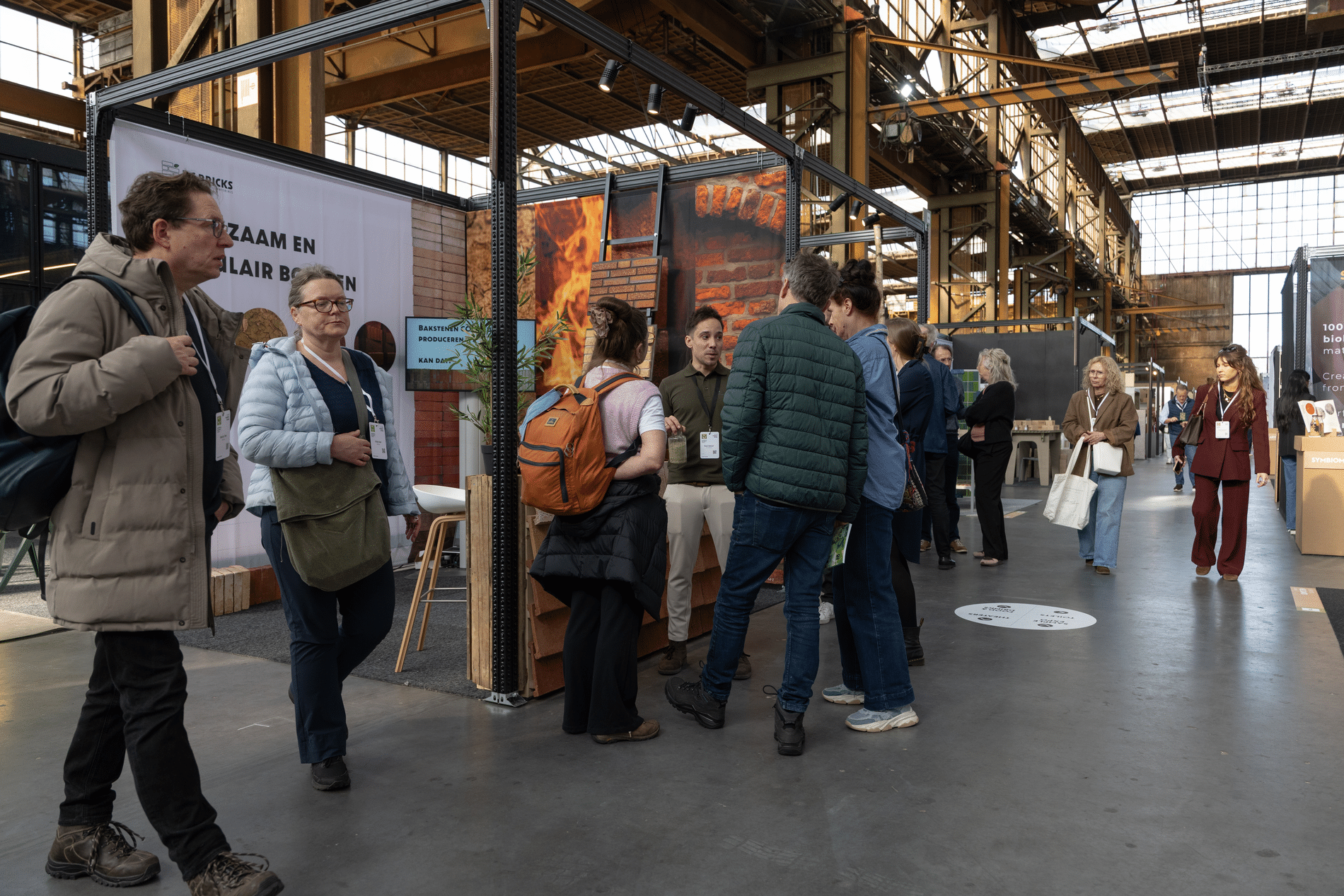
For many visitors, moreover, the event is a moment to get an overview of new material developments in a short period of time. Here the physical aspect plays an important role: materials can not only be viewed, but also touched and compared - an essential part of the design process. Architect Jacques Dupuis therefore calls the fair “a creative bubbling innovation lab that generates lasting contacts and new collaborations.”.
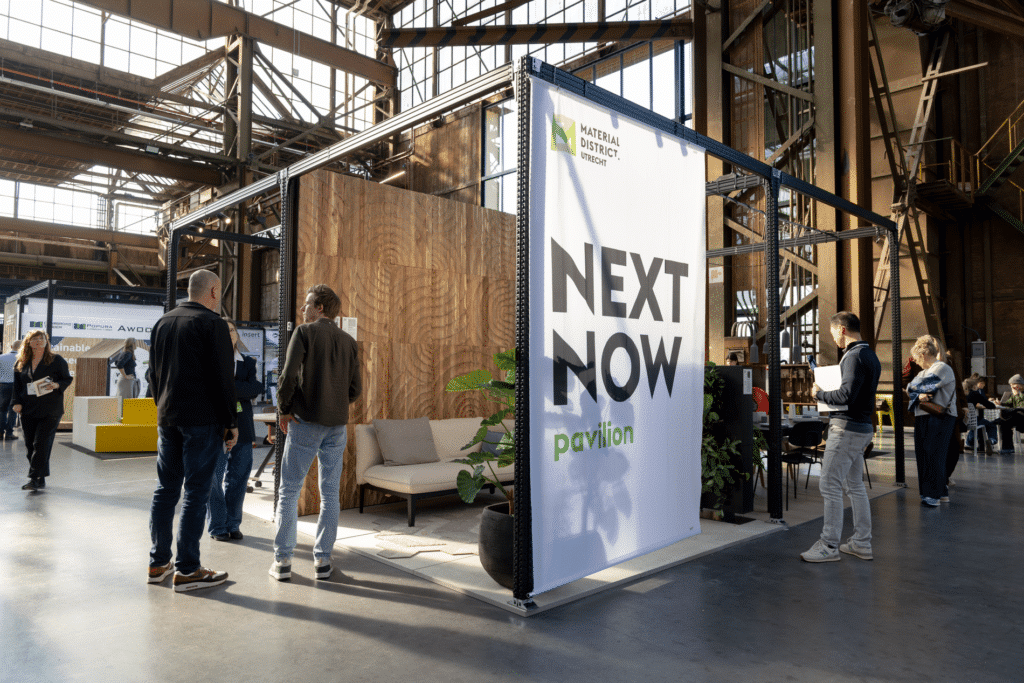
The central theme of this edition was NextNow. With it, MaterialDistrict wants to emphasize that many solutions for more sustainable building are already available. “With the theme NextNow, we emphasize that the solutions for the future already exist,” says Van Oostveen. “Building more sustainable, honest and healthier is not something for later. The future starts now.”
To make that idea tangible, among other things, the NextNow pavilion was introduced. Here innovative materials were not only shown as samples, but also applied in recognizable interior and exterior spaces, such as a living room and kitchen. By presenting materials in a spatial context, it became visible how bio-based and circular solutions can become part of everyday living and working environments.
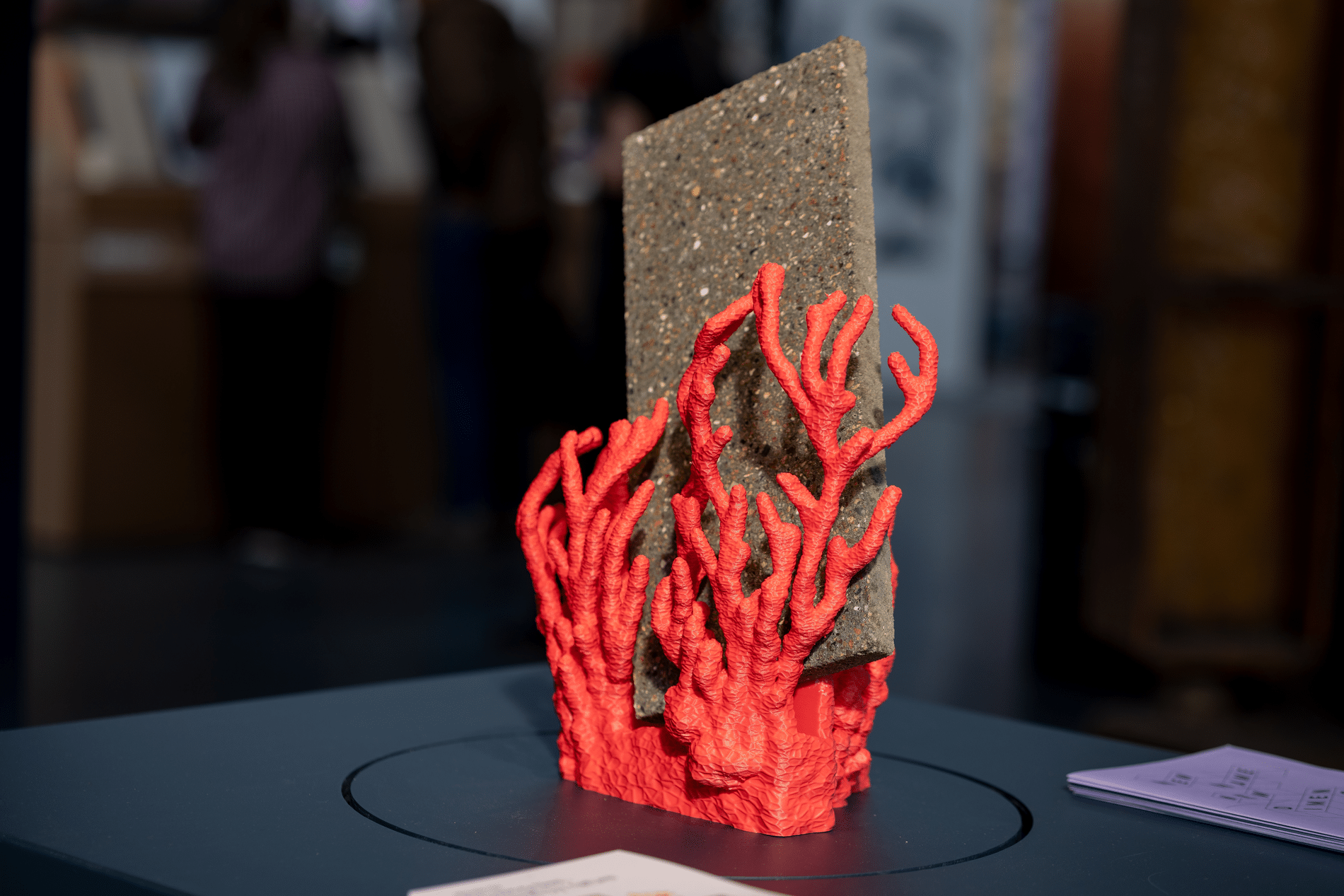
On the show floor, it became clear how widely material innovation is now developing. For example, Front Materials presented the Mimmik Tile, developed with Biomason: a tile produced using bacteria inspired by the growth of coral. According to Ward Massa of Front, this technology can significantly reduce the carbon footprint of building materials.
SAM Panels also presented a structural I-beam made from local residual fibers as an alternative to traditional wooden beams. After participating in the previous edition, it has now generated more than 250 new leads and is working on application in construction.
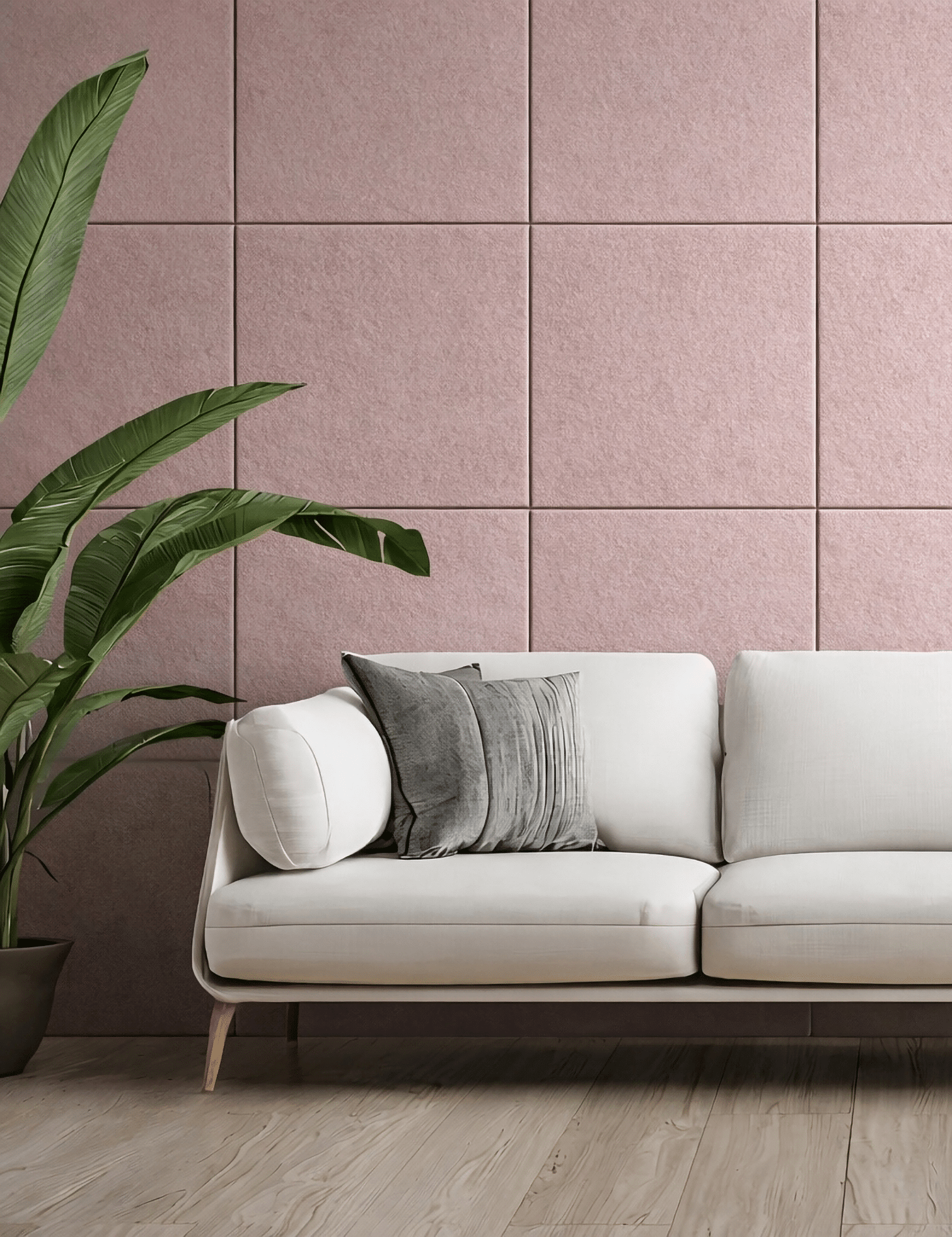
Other examples show how waste streams are increasingly being converted into high-quality materials. DC Bricks developed a brick from dredged material from the IJ River together with the City of Amsterdam, while HempWood Netherlands produces floors, panels and beams from hemp. In addition, the German project LignoLight is investigating how lignin - a residual product from the paper and cellulose industry - can be used in lightweight furniture and shoes, among other things.
An important step toward practical application this year was the collaboration with construction and engineering company TBI. Twenty exhibitors were given the opportunity to pitch their innovation to a jury from the company. Three of them received a practical voucher of €10,000 to further develop or test their innovation in cooperation with one of the TBI companies.
The vouchers went to Reduco, producer of biobased facade panels made from Dutch willow, Mycelium Material, which develops materials based on mycelium, and Isohemp, producer of natural hemp blocks for insulation and construction.
In addition to the fair, the content program also developed further. In cooperation with PEFC Netherlands, MaterialDistrict organized the Tomorrow's Timber Talks, a lecture program on timber construction and biobased materials in architecture. The lectures are registered with the Register of Architects as official continuing education.
With a wide range of exhibitors, new collaborations and an ever stronger connection to construction practice, MaterialDistrict Utrecht once again confirmed its role as an important platform for material innovation. From March 10 to 12, 2027, the event returns to the Werkspoor Cathedral for its twentieth edition.