Platform on architecture, interior design and landscape architecture
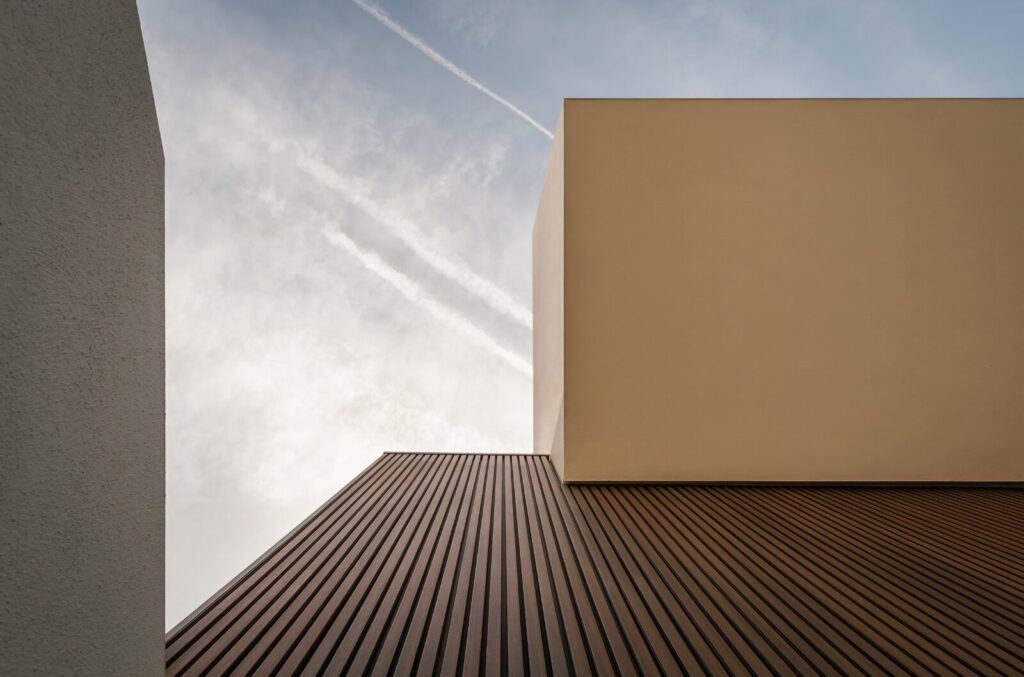
The facade has long since ceased to be merely the protective shell of a building. Increasingly, it forms an integral part of the architectural concept, where the experience of materials, aesthetics, and sustainability come together. Architects are therefore actively seeking solutions that combine the warm, natural look of wood with the performance of innovative materials: a long service life, minimal maintenance requirements, and a lower environmental impact. Within Felix’s portfolio, Fiberdeck® addresses this need with WEO® wood composite: a material category that combines design freedom with predictable performance.
“The facade is increasingly being used as an architectural design tool,” says Marcel Kamps, product manager and quality specialist at Felix. “Architects are actively seeking materials that are not only aesthetically appealing but also align with a project’s sustainability goals. This isn’t just about how it looks upon completion, but also about how a facade will perform throughout the building’s entire lifespan.”
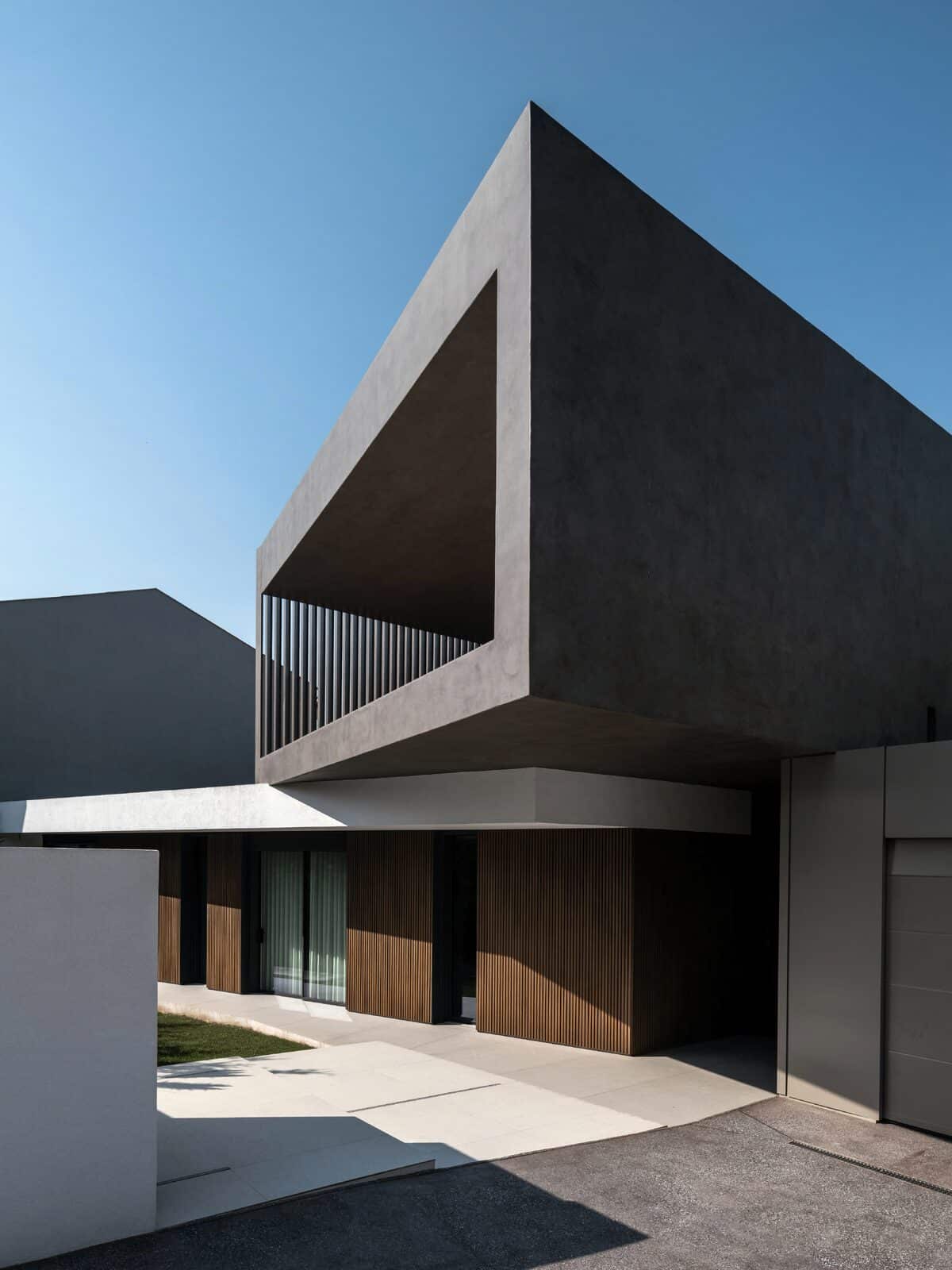
Wood remains popular in architecture because of its warm appearance, natural texture, and tactile quality. At the same time, traditional wood requires regular maintenance and ages under the influence of sunlight, moisture, and weather exposure. As a result, there is growing interest in materials that offer the same warmth but also provide greater reliability in terms of dimensions, color development, and maintenance.
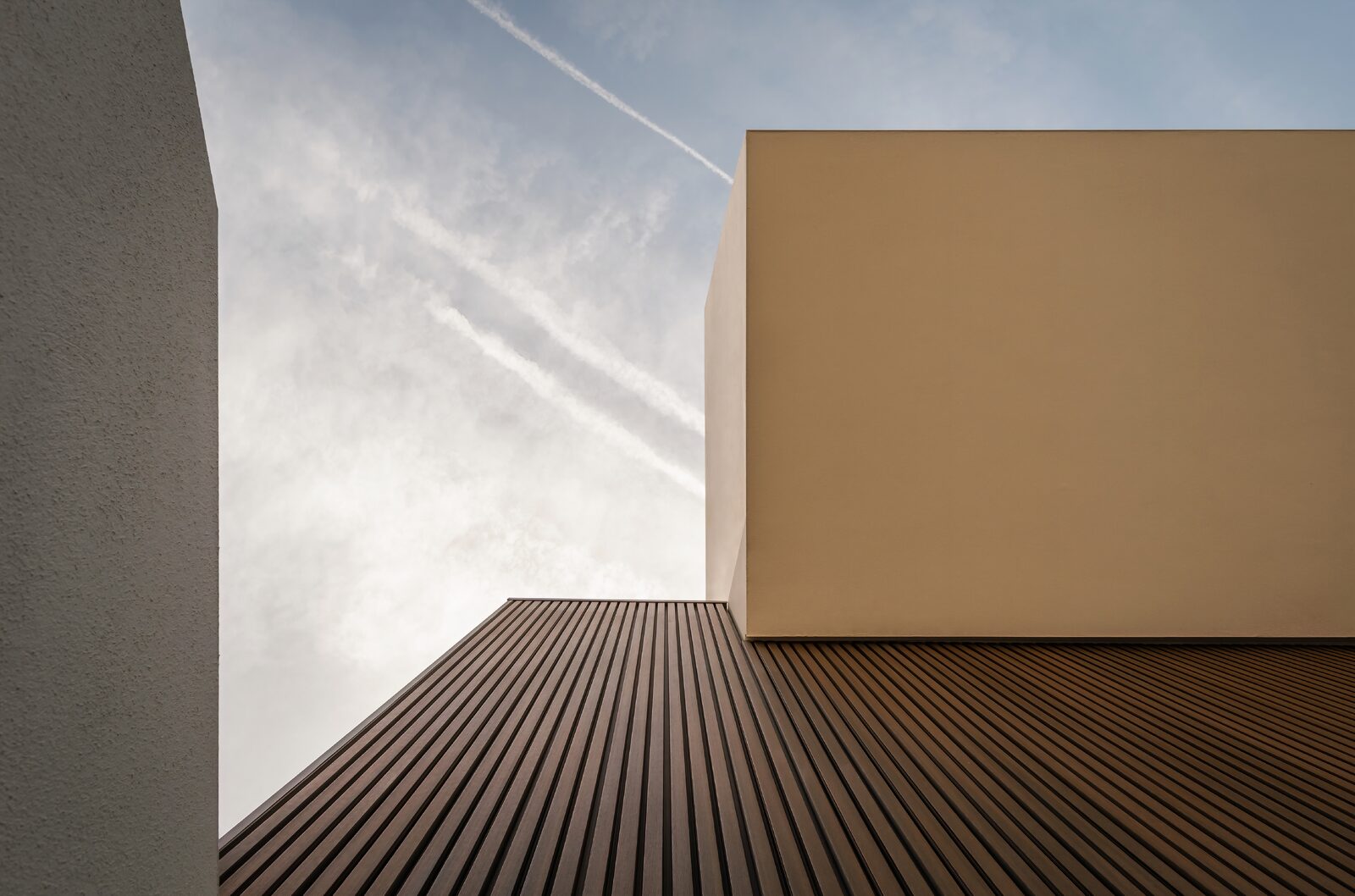
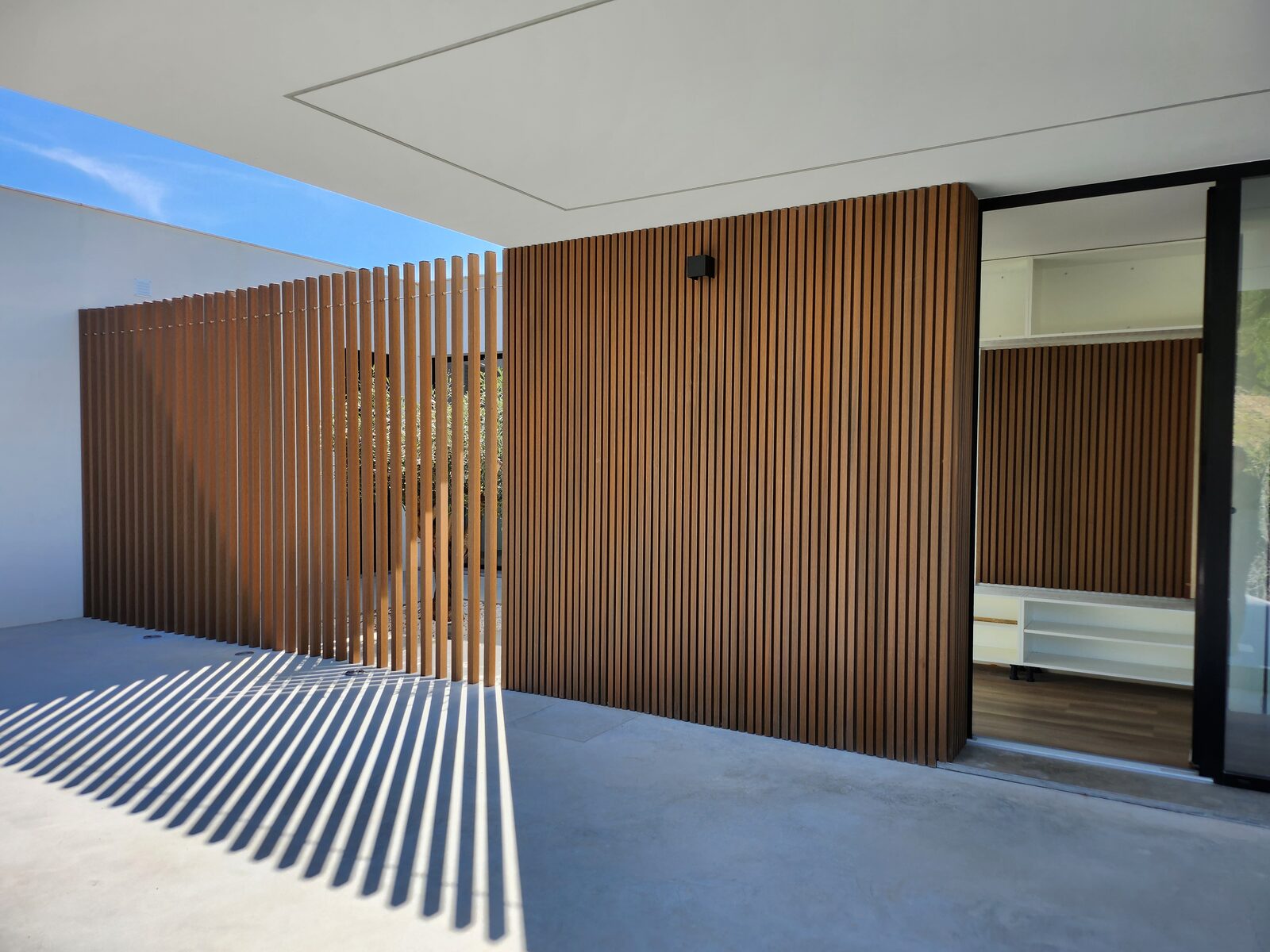
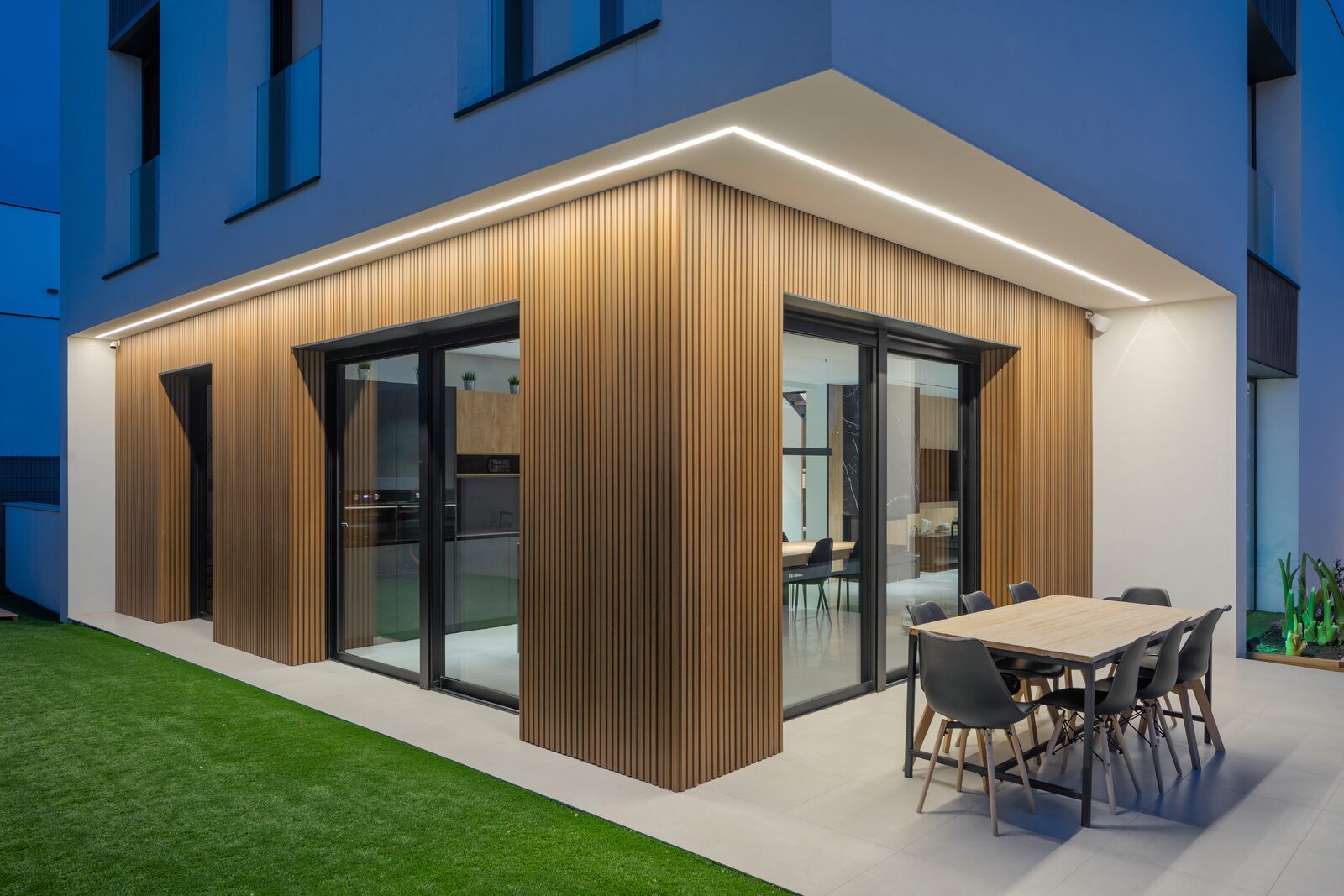
With WEO®, Fiberdeck® offers a wood-composite solution that combines the look of wood with the advantages of a technically advanced siding material. Thanks to an innovative co-extruded layer, the profiles are colorfast, UV-resistant, and withstand varying weather conditions. The variety of profile shapes, colors, and finishes also gives architects complete freedom to create their own facade design. “Architects don’t want to be limited by the properties of a material,” says Kamps. “Our modern wood composites provide the freedom to design with color, rhythm, and detail, while maintaining technical performance.”
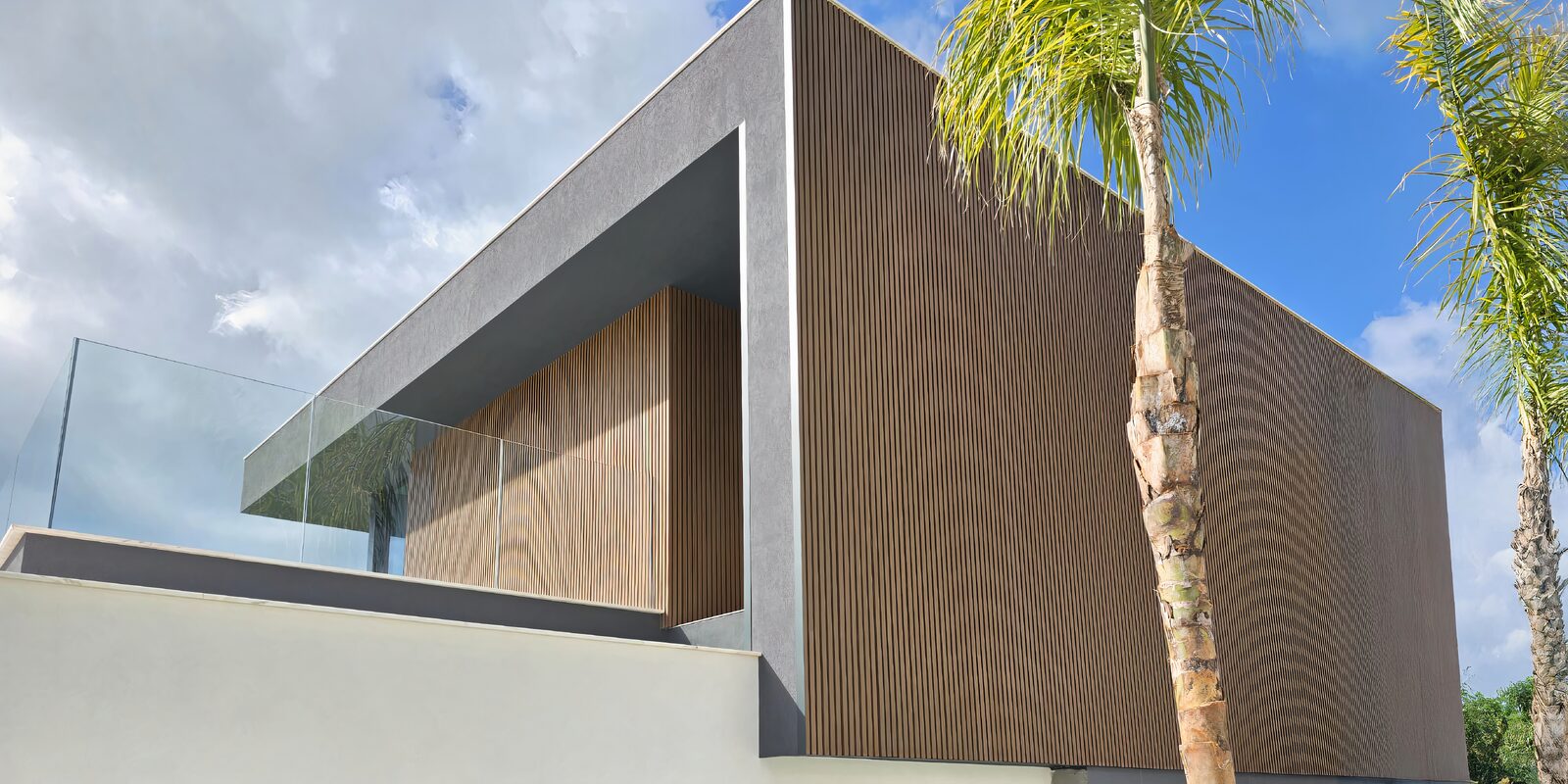
According to Fiberdeck®, sustainability goes beyond simply choosing a circular material. Service life, maintenance, and material stability also play an important role. WEO® products consist of approximately 95% recycled wood fibers and plastics. In addition, the production process relies heavily on the use of renewable energy. “A sustainable facade isn’t automatically the one with the highest percentage of recycled material,” explains Kamps. “Service life, degradation, and maintenance also determine the final environmental performance.”
WPC (Wood-Plastic Composite) therefore combines a high percentage of recycled material with excellent dimensional stability, minimal moisture absorption, and a long service life. Thanks to the UV-resistant top layer, the color remains stable over the long term, even for challenging colors such as red and brown. It’s no coincidence that Fiberdeck® offers a twenty-year color guarantee on WEO® siding. Furthermore, WEO® offers additional design flexibility. Thanks to its hollow profile, WEO® is generally significantly lighter than solid cladding profiles made of hardwood or thermobamboo, even with the same external dimensions.
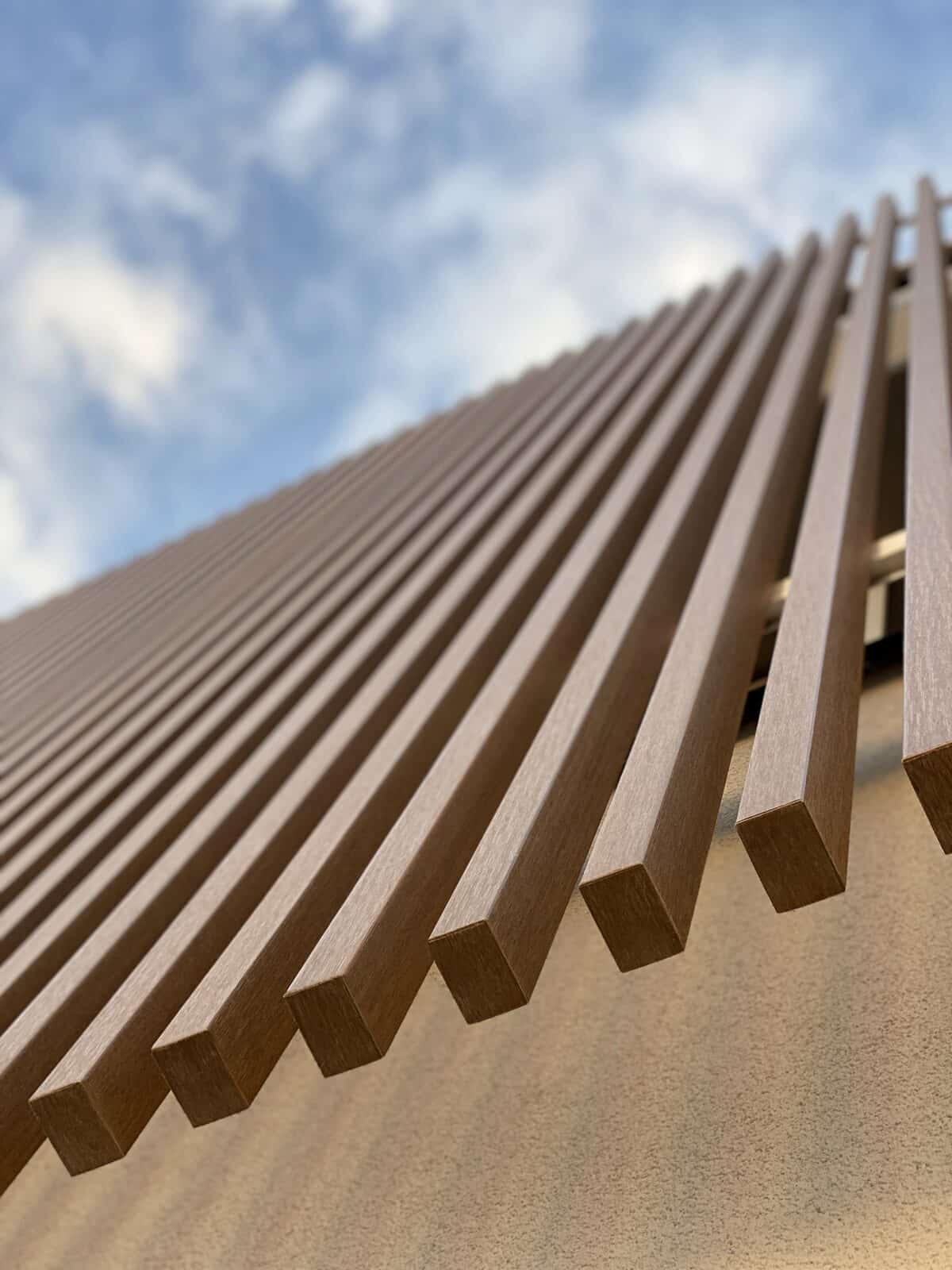
According to Kamps, there is no one-size-fits-all solution for every facade. “The best choice depends on the architectural vision, location, building height, detailing, maintenance strategy, and desired service life. Some clients actually appreciate it when a facade ages naturally, while others want to maintain the same appearance for decades.” Felix and Fiberdeck® therefore supply thermobamboo siding and WEO® wood composite, respectively. While thermobamboo undergoes a natural aging process, WEO® offers maximum color stability, dimensional stability, and minimal maintenance requirements. "Our WEO® 35, WEO® 60, and WEO® 120-60 are currently among our most important facade products. In addition, WEOSUN® Brise Soleil is increasingly being used as an architectural design element for sun protection and facade refinement.”
In addition to material development, Fiberdeck® invests in digital support for the design process. With the MyDeckPlanner and MyFencePlanner configurators, architects and dealers can easily put together, visualize, and technically develop projects. MyDeckPlanner is designed for decks and allows users to upload design drawings, after which various products, colors, and profiles can be digitally applied and compared. “The tool then automatically generates an overview of the required materials, including profiles, substructure, and fasteners,” says Kamps. “This not only creates a realistic impression of the final result, but also gives architects immediate insight into the technical details, material requirements, and costs.”
MyFencePlanner offers similar capabilities for fences and garden partitions, in both 2D and 3D. This allows design choices to be visualized early in the process and easily coordinated with clients and contractors. “Digitization helps architects make decisions faster and compare different material options,” concludes Kamps. “This way, material selection becomes not just an aesthetic consideration, but an integral part of a sustainable and forward-looking design.” •
Neem dan rechtstreeks contact op met Felix.
 Contact opnemen
Felix (Distribution), import and export of, and trade in, wood and other materials.
Bekijk Bedrijfsprofiel