Platform on architecture, interior design and landscape architecture
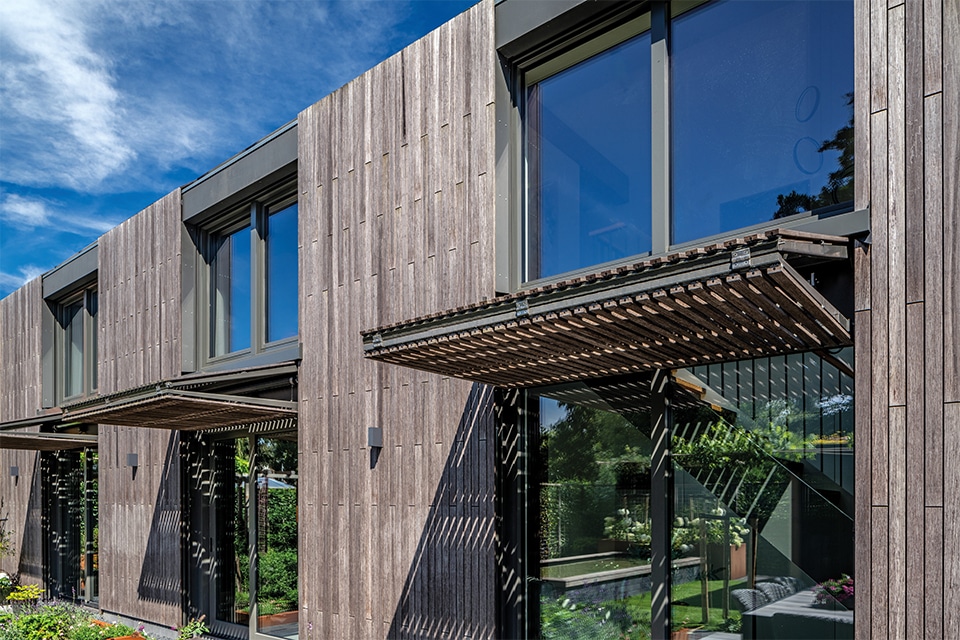
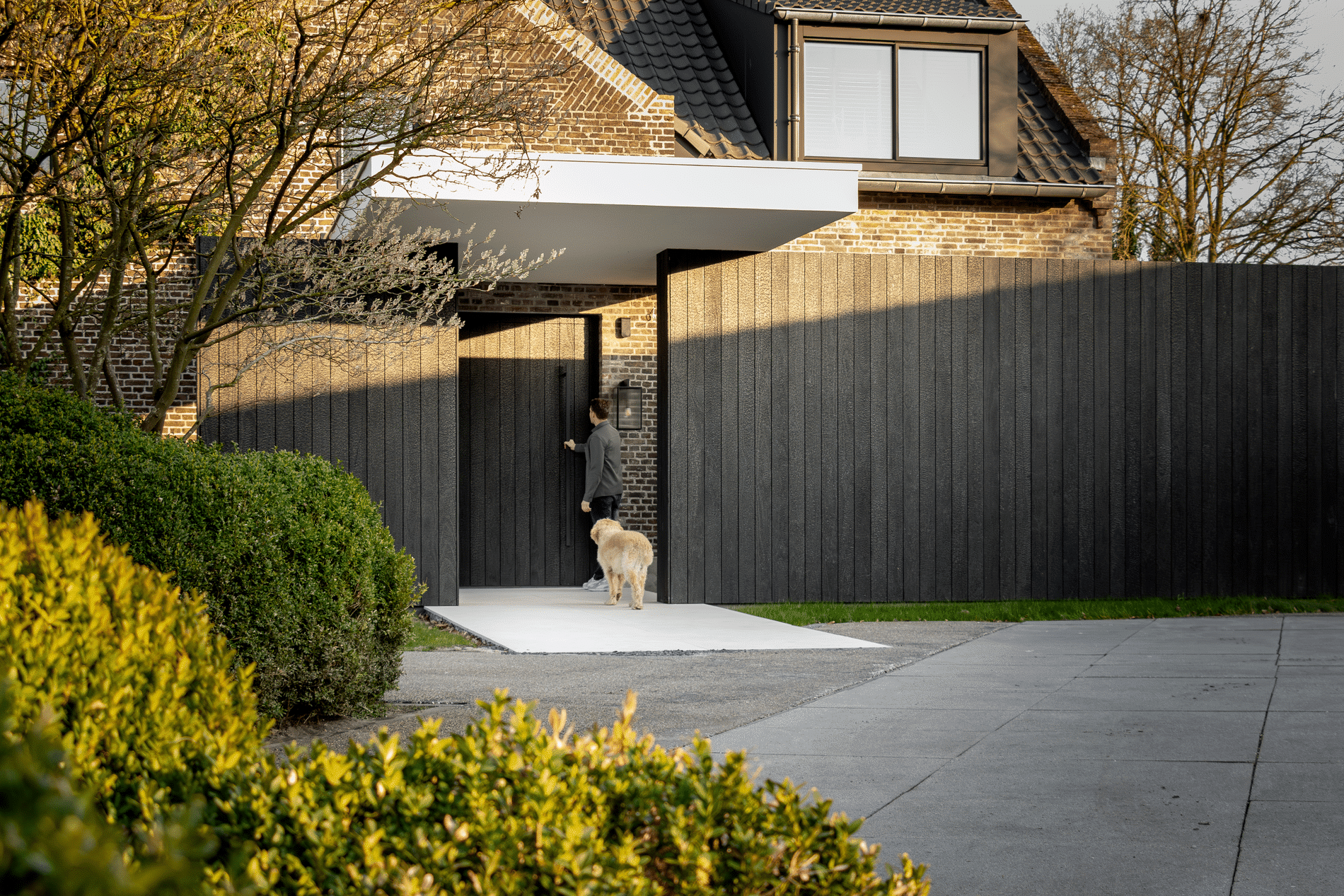
In the heart of Haarlem stands a home that blends in with the adjacent industrial buildings while simultaneously catching the eye. For Artino, a manufacturer of folding-lift shutters, this bio-based passive house has become a project that attracts a great deal of attention. NarrativA Architects designed the home as a contemporary interpretation of the surrounding warehouses: a sleek, rectangular volume with a gabled roof. The continuous bamboo cladding on the facade and roof gives the house a monolithic character, while clever detailing and integrated sunshades ensure a sense of calm and cohesion.
For architect Shai van Vlijmen of NarrativA, the design revolved around orientation, energy performance, and comfort from the very beginning. “In passive construction, the sun isn’t just a detail—it’s an essential part of the design,” he explains. “In the winter, you let the low sun penetrate deep into the home for free heat gain. In the summer, on the other hand, you keep the high sun out with smart south-facing overhangs and well-designed exterior sunshades.” That principle ultimately led to the use of Artino’s electric folding-lift shutters on the south facade, as an integrated solution for sunshading and ventilation.
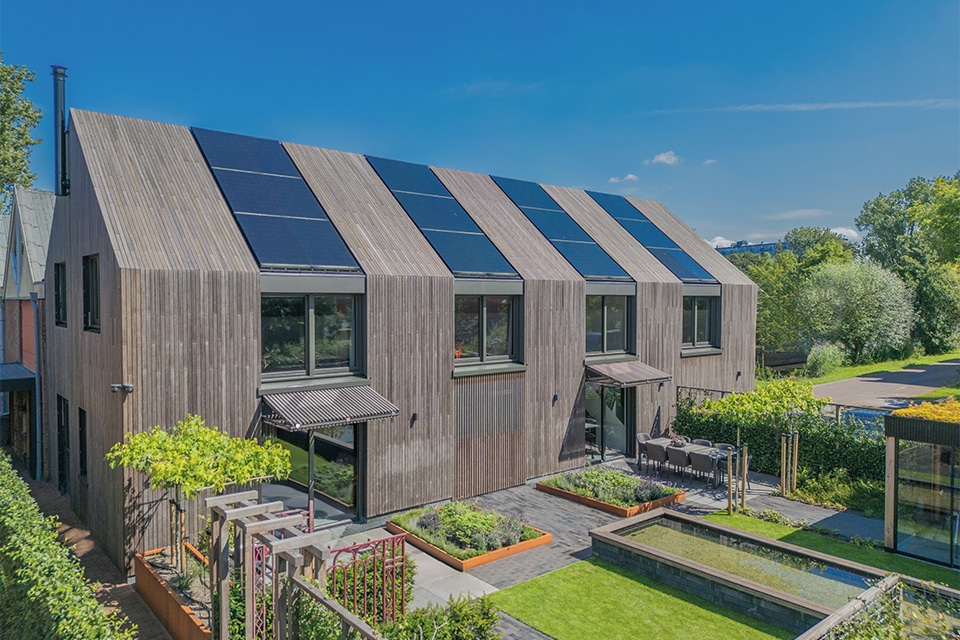
That decision wasn’t based primarily on aesthetics, but on regulatory requirements. “Normally, you prevent overheating on the south facade with a well-designed overhang or porch,” says Van Vlijmen. “But here, the zoning plan didn’t allow that, because of the ‘front yard’ designation. It was precisely that restriction that led us to an unexpected solution: folding shutters.” The architect immediately saw the potential, but also the technical challenge. “You need a lot of information to properly detail a system like that. Everything had to fit exactly: when closed, the shutter had to align perfectly with the facade cladding. In the end, we made the facade slightly thicker to get all the components in line.”
The home operates entirely according to the Passive House principle: excellent insulation, a highly airtight building envelope, and a balanced ventilation system with heat recovery. As a result, traditional radiators or underfloor heating are not necessary. A compact heat pump, integrated with the ventilation system, provides only the limited additional heat needed on cold days and also supplies hot tap water. Fresh outdoor air is preheated by the ventilation system, while passive solar gains in the winter help keep the home at a comfortable temperature.
For Artino, the project became a major showcase project. “It has turned out to be a remarkable home that’s attracting a lot of attention, which is why architects are increasingly finding their way to us.” According to Jasper Vos, the strength of the folding shutters lies in the combination of technology and architecture. “There’s a great need for a sunshade solution that doesn’t detract from the façade’s appearance. With these shutters, you actually add something to the design.”
“We always start with the architect’s vision and the desired structure of the facade,” says Vos. “Then the puzzle begins. Sometimes there seems to be too little space, but by working together, solutions emerge. That process only works if you’re involved early in the design.”
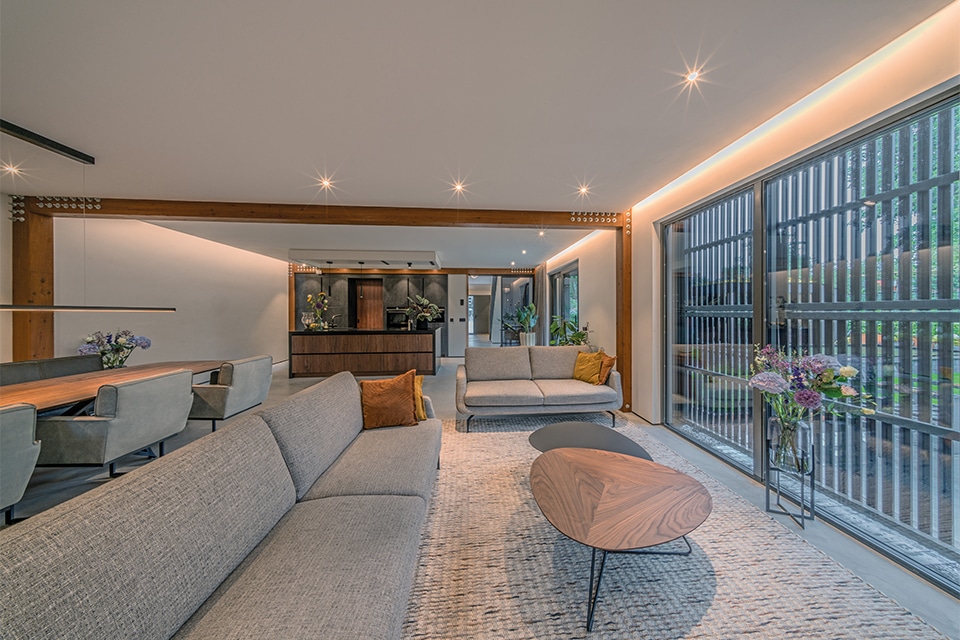
The choice of materials also required careful coordination. The exterior cladding consists of bamboo from Awood, a specialist in sustainable facade systems. Wim Achterweust calls the project a logical example of biobased construction. “This material is extremely stable, hard, and durable. That’s a good fit for a passive house.” At the same time, the material presented technical challenges. “Bamboo has a high density and is therefore quite heavy. Together with Artino, we looked into additional support and heavier motors for the shutters.”
According to Achterweust, it was precisely that collaboration that made the difference. “Each party knew its role, but everyone also contributed ideas toward the big picture. Artino listened carefully to the architect’s wishes and had the technical expertise to make it a reality.”
When open, the folding shutters function as an awning and block direct sunlight. When closed, the view and daylight are partially preserved thanks to the semi-open structure of the bamboo panels. As a result, the shutters not only contribute to the energy concept but also to the character of the home.
Neem dan rechtstreeks contact op met Artino.
 Contact opnemen
Artino takes your facade and outdoor space to the next level. It is not just another system, it is Art with a capital A. With Artino, your façade gets its own character. The many possibilities allow you to give your living space your own twist, inside and out. Create the expression that suits you. Our story: [...]
Bekijk Bedrijfsprofiel