






Sustainable fire-safe facades increasingly essential
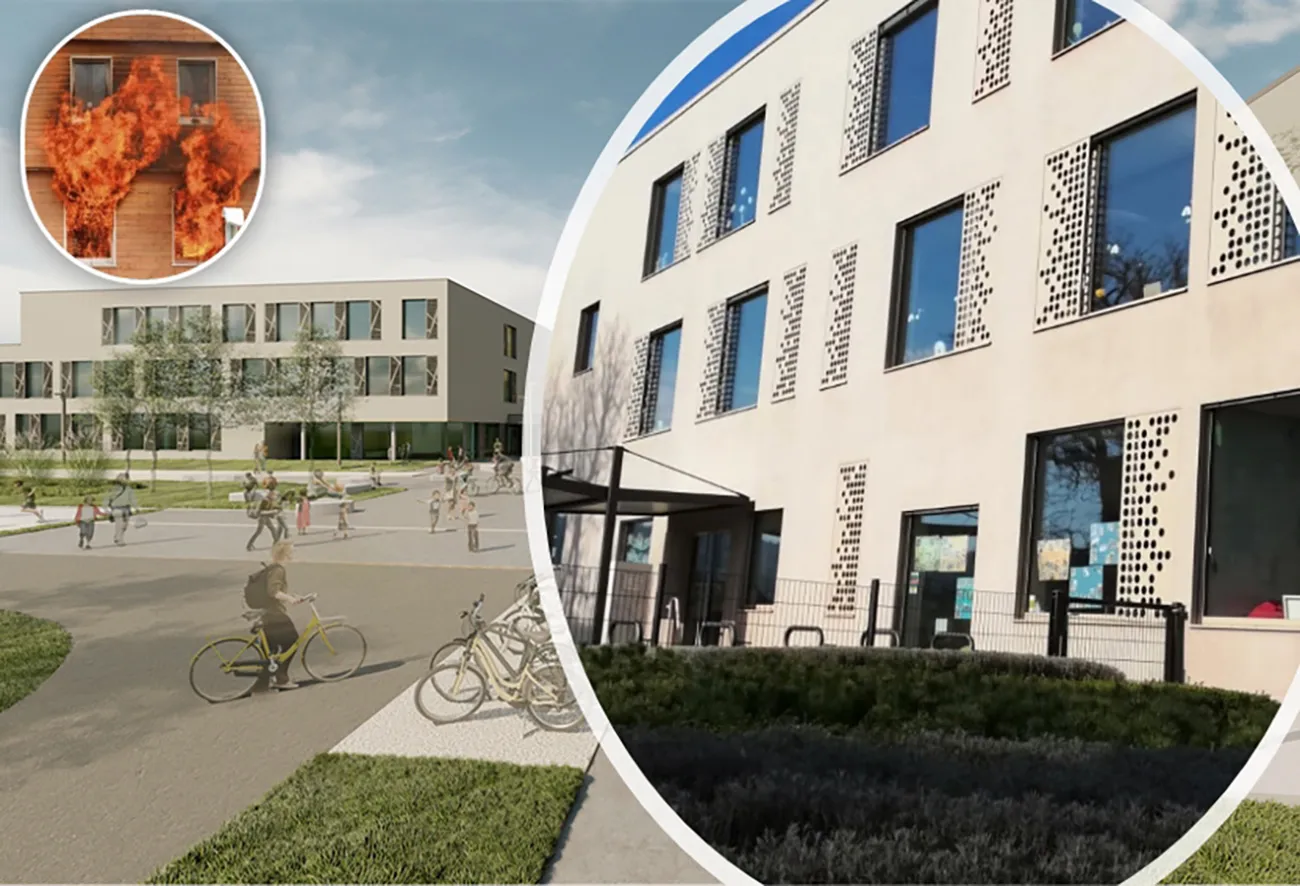
Goed isoleren, maar zeker ook goed ventileren, zijn belangrijke thema’s in de bouw. Nu de zomers steeds warmer worden zien we dat goede geveloplossingen belangrijk zijn, die niet alleen warmte binnenhouden in de winter, maar ook warmte kwijt kunnen in de zomer. FB® Cavity Barrier maakt een brandveilige én geventileerde gevel van hout mogelijk.
Safe wood through fireproof insulation
Good insulation, but certainly good ventilation, are important topics in construction. With summers getting hotter, we see that good façade solutions are important that not only keep heat in during the winter, but also release heat during the summer. FB® Cavity Barrier makes a fire-safe and ventilated wood facade possible.
"Wooden façade solutions are more and more in demand, which was also evident at the GEVEL 2022 trade fair," says Erik Hansen, responsible for sales in the Benelux countries at ODICE. This is a sustainable choice and, according to Hansen, can also contribute to good insulation, as has already been proven in Nordic countries.
The factors of fire safety
In the Netherlands, fire class B is required for new construction. This fire class must be shown by the complete construction system. The fire class of the cladding is not enough. The B-Class is achievable with wood facade solution in certain build-up systems but not in all constructions. The defect of the current rules consists of the fact that the facade construction is rarely tested, and the Building Code does not require proof of the legal requirements, but only wants to make it plausible. The Ministry of the Interior also concludes this in the "Handreiking Beoordeling brandveiligheid gevels".
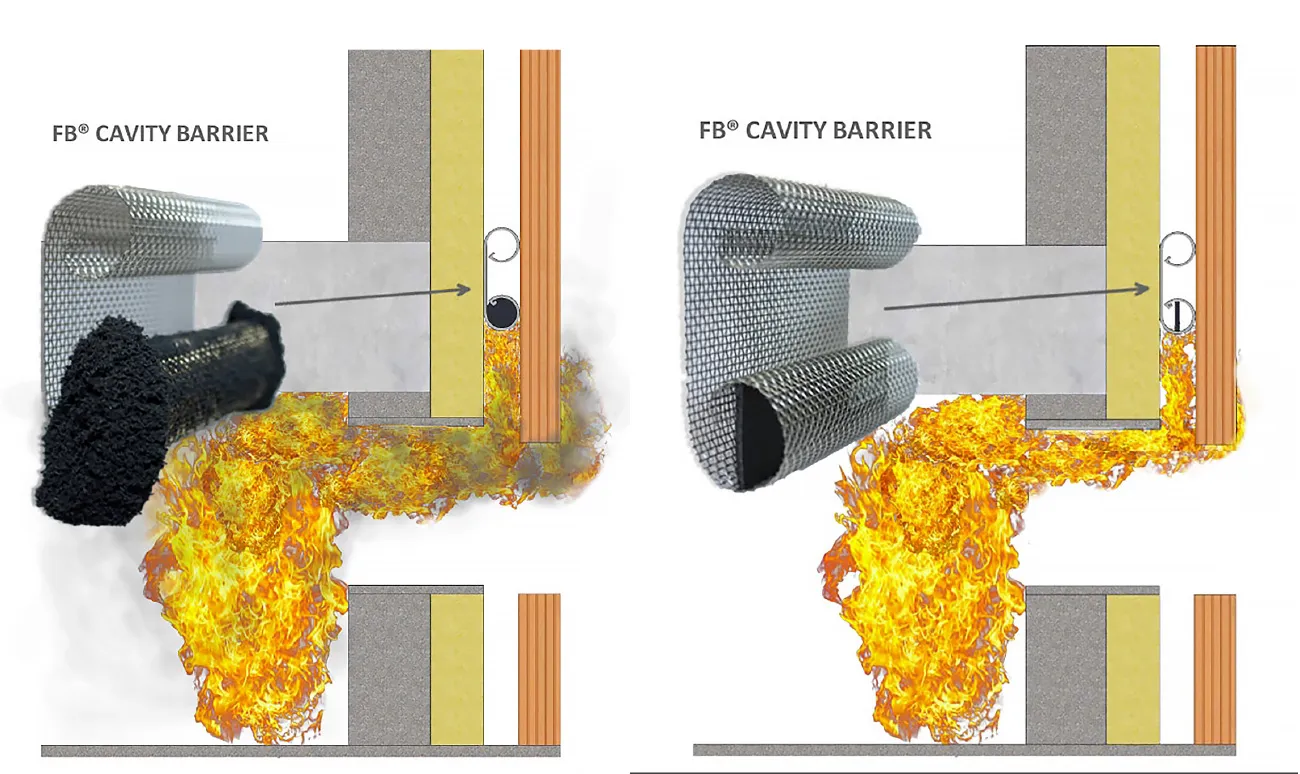
The ministry recognizes that the fire safety of facades depends on the way it is constructed. Hansen: "Fire class B must be shown on the complete facade construction system. With ventilated facade systems, fire class-B is more difficult to achieve. However, the fire class of the cladding alone is not enough; there is also a difference between fire reaction and fire resistance. Both sides of the facade must be protected. Ventilated cavities have the disadvantage that a fire can spread through them. Because of draft, this happens 5 to 10 times faster on the inside than on the outside."
Stopping fire in air cavity
By dividing the air cavity of ventilated facades into smaller fire compartments, the further spread of fire through the air cavity can be prevented.
"For this, we offer the FB® Cavity Barrier solution. This contributes to both fire response and fire resistance. FB® Cavity Barrier is a unique, patented passive fire-resistant insulation that immediately stops flames, reliably seals the air gap of the ventilated facade and prevents the spread of flames for up to 90 minutes. One layer is sufficient for a delay for 30 minutes. In this way, we contribute to making ventilated wood cladding demonstrably more fire-safe. We make the gray area as white as possible."
Question about this story? Ask your question
Keep following this
Get an email when a new story is published. No account needed.
- ThemeDesigning façades and roofs
- SubjectExteriors